Roanoke
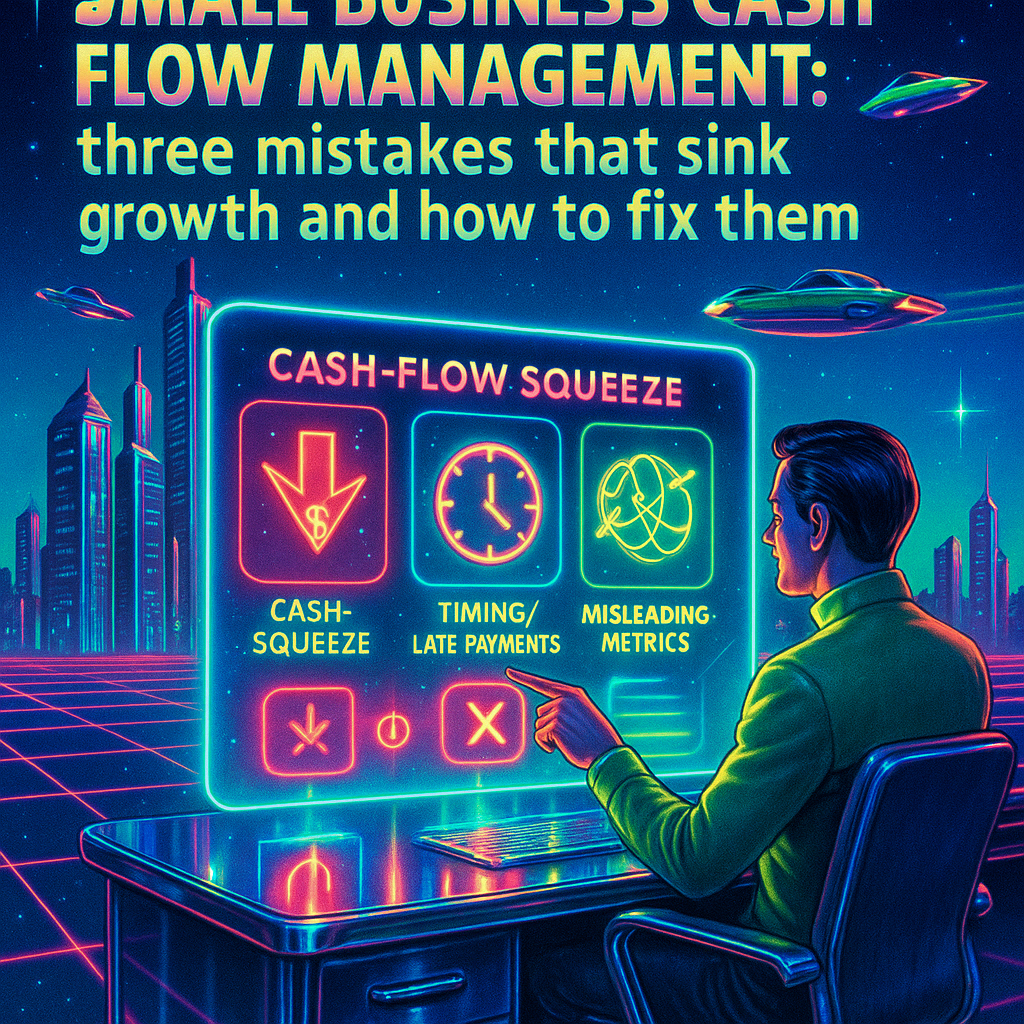
Small business cash flow management: three mistakes that sink growth and how to fix them
When my shop lost a major client in August, revenue dropped 35 percent overnight. Payroll was due in five days and our line of credit sat unused because no one had the paperwork ready. I watched good people scramble while I realized we had traded consistent cash practices for optimistic spreadsheets.
Cash flow is not an accounting problem. It is an operational problem that shows up in hiring, vendor relationships, and day-to-day decisions. Small business cash flow management, done poorly, turns solvable bumps into existential crises. Done well, it gives you options when revenue dips and confidence when you scale.
Mistake 1 — Treating profit as the same thing as cash
Owners often celebrate a profitable month while bank balances fall. Invoiced work counts as income, but it becomes meaningless if customers pay late. Inventory purchases, deposits on equipment, and one-time tax bills create timing gaps that profit figures do not reveal.
Fix: map timing, not just totals. Build a 13-week cash forecast that lists expected inflows and outflows by week. Update it every Monday using actual receipts and current invoices. That forward view shows whether payroll, rent, and vendor payments line up with receipts.
Implement rules that force reality into the forecast. For example, assume only 80 percent of invoices will land when expected. Assign a probability to large receivables. Those small adjustments convert optimism into usable forecasts.
Mistake 2 — Overreliance on a single customer or channel
Relying on one big customer feels stable until it ends. When a major account leaves, many owners discover their margins and operations were structured around that single revenue source. Collections become frantic and concessions multiply.
Fix: reduce concentration risk with deliberate steps. First, track revenue by customer and channel monthly. If one client represents more than 20 percent of revenue, build an action plan to diversify within 6 to 12 months.
Second, price contracts to include a churn buffer. If a large account negotiates steep discounts, index a portion of the rate to volume or duration so you preserve margin when you need it most.
Third, keep a contingency line: a small, pre-approved credit facility or a cash reserve equal to one month of fixed costs. That reserve bridges timing gaps without forcing desperate invoices or layoffs.
Mistake 3 — Weak collections and payment terms
Many owners extend terms to close deals and then forget to collect. Net-30 becomes net-60, then net-90. That habit pushes the burden of cash management onto the business instead of the customer.
Fix: standardize terms and enforce them. Make terms part of the sales script. Require a deposit for new accounts and tiered deposits for larger projects. Use simple incentives: a 1.5 percent discount for payments within 10 days or a fixed late fee after 30 days.
Technology helps. Automate invoices and reminders. Use templated follow-ups and escalate to a phone call after 15 days. If you work B2B, consider a short onboarding checklist that captures billing contacts and preferred payment methods. That single administrative detail prevents months of delay.
When to escalate collections
If a client moves past 60 days, pause future work until payment clears. That is a hard conversation, but continuing to deliver services without payment trains customers to pay late. If pause isn’t possible, get a signed payment plan with clear dates and consequences.
Operational habits that protect cash flow
Create predictable routines. Run a weekly cash review with operations, sales, and accounting. Share the 13-week forecast and identify one next-best action to improve cash position. Assign ownership for each action and follow up the next week.
Trim predictable leaks. Review recurring subscriptions and vendor contracts every quarter. Small services add up. Negotiate annual contracts to shift seasonality or convert fixed fees into usage-based billing when possible.
Invest in simple internal controls. Require two signatures above an agreed spend threshold. Match purchase orders to invoices before payment. These steps slow reckless spending and reduce surprises.
Embed cash thinking into hiring and purchasing. When hiring, model the 90-day cash impact. For equipment purchases, model total cost of ownership and not just the sticker price. Those calculations make growth decisions less emotional and more operational.
Midway through a recovery, we rewrote payment terms for new customers and started small weekly forecasting meetings. We also created a modest reserve equal to one month of fixed costs. That combination kept payroll steady and let us negotiate better payment cadence with suppliers.
Here’s one leadership principle that matters: consistent routines beat heroic fixes. Good habits make the business resilient. If you want a compact primer on leading teams through operational change, see this short piece on leadership.
Practical checklist to start today
- Build a 13-week cash forecast and update it weekly.
- Identify any customer making up more than 20 percent of revenue and draft a diversification plan.
- Standardize payment terms and require deposits for large projects.
- Create a one-month fixed-cost reserve and a plan to replenish it.
- Hold a weekly cash review with assigned owners and one decision point.
These five steps do not require new software or consultants. They require discipline, a brief weekly meeting, and simple templates. The output is not a magic number. It is a set of predictable choices you can make when revenue changes.
Closing insight — cash is a leadership tool
Cash flow is feedback from the market and from your operations. It tells you where processes fail, which customers strain your resources, and which investments buy real capacity. Treat cash as a source of truth. Use short forecasts, enforce terms, and build predictable routines.
When you do, you stop firefighting. You make cleaner decisions about hiring, pricing, and growth. That is how small businesses survive setbacks and scale without surprise.