Roanoke
I thought we'd lost the contract that paid the bills.
Last spring a long-term client called with a single line: “We need tighter delivery windows.” My operations manager heard it as a systems problem. I heard it as a people problem. For two frantic weeks we chased schedules, added temporary workers and reworked routes. The contract stayed, but at the end I realized we had wasted time and money fixing symptoms. We needed processes that prevented the calls in the first place.
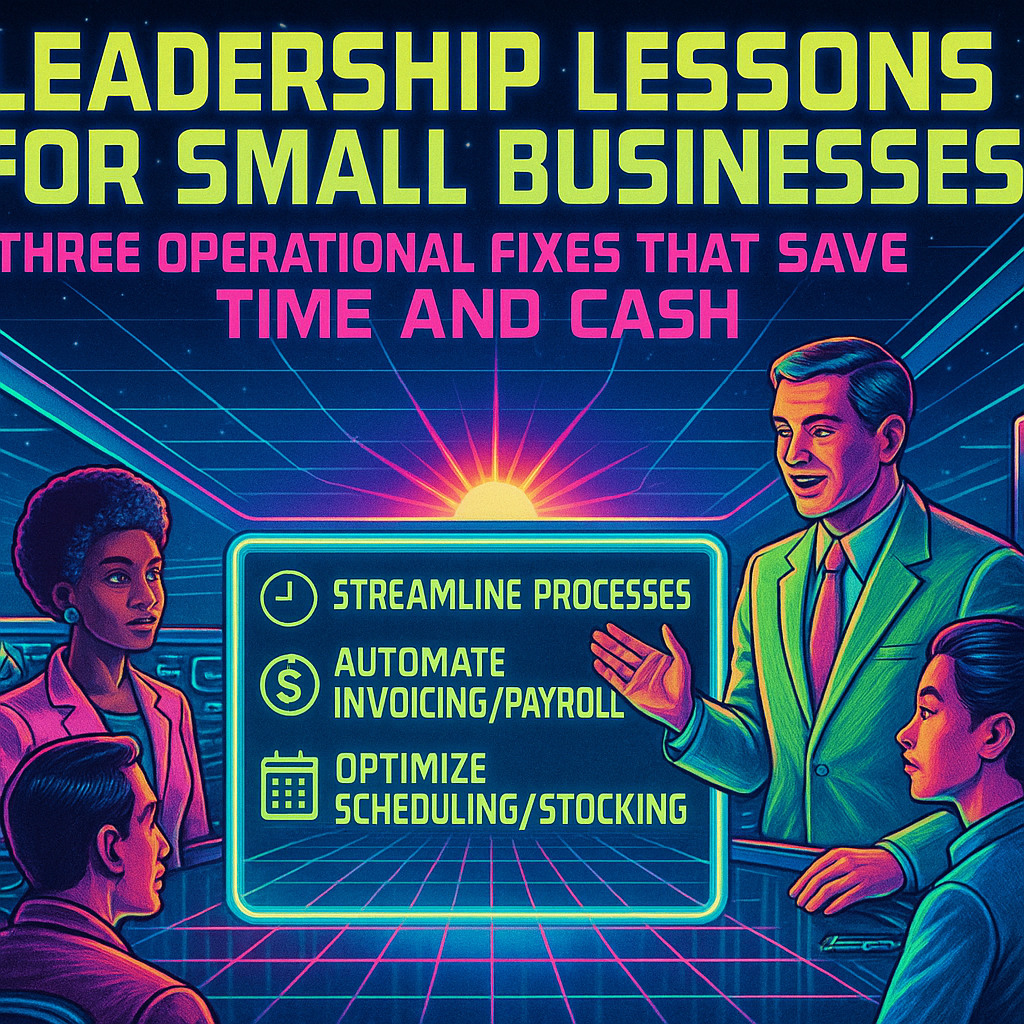
That episode became the lens I use when advising other owners on small business leadership. If you run a local shop or a regional service company, a few practical operational fixes will reduce firefighting, shrink costs and make your team calmer. Here are three that work in the real world.
Standardize the small decisions so the big ones stay strategic
Too many day-to-day choices live in people’s heads. That creates inconsistency and forces managers to arbitrate every dispute. I started by mapping the five decisions that caused the most questions: scheduling priority, customer escalation, inventory reorder points, who approves discounts and when to hire temporary help.
Write simple rules for each decision and store them where staff can find them. Use plain language and one or two examples. You will not eliminate judgment, but you will reduce repeated interruptions.
When a new front-line supervisor used the rulebook to approve an extra-hour shift for a job that clearly required it, we saved the owner an interruptive phone call and got the crew out the door faster. Small, documented decisions free leadership bandwidth for planning.
Reduce variation in delivery and workflow with small experiments
Variation kills predictability. We measured cycle times for three common tasks and found one took twice as long when performed by a junior team member. Instead of mandating a single method, we ran short experiments.
Pick one problem, test two fixes for two weeks and measure. We tested a checklist for the junior crew and a five-minute pre-shift huddle for the senior crew. The checklist reduced rework by 40 percent in week one. The huddle improved coordination, but only for some routes.
Small experiments do two things. They build evidence you can act on. They reduce resistance because changes feel low risk. Track results on a one-page scorecard so everyone sees progress.
Treat inventory as a cash problem, not an accounting one
Excess inventory ties up working capital. Too little inventory costs you rush shipping, premium labor and unhappy customers. We treated a chronic stock problem as a cashflow issue, not a logistics mystery.
Start with a simple calculation: how many days of inventory do you carry by product or material? Then calculate the cash value of that inventory on your balance sheet. For one small business that number surprised the owner — it funded a month of payroll.
Use reorder points tied to daily usage, not vague thresholds. If you must set safety stock, quantify the cost of that stock versus the cost of a missed order. When the ledger shows inventory as idle cash, owners make different choices about purchase frequency and supplier terms.
A practical people fix: build clear escalation lanes
Operational fixes fail if staff do not know when to escalate. A customer called at 9:00 p.m. about a delivery problem. Our policy said escalate anything outside the appointment window. The tech on duty called a manager who then woke the owner. The team lost sleep and goodwill.
Replace that messy chain with a simple escalation lane: front-line staff, shift lead, operations lead, then owner. Define time limits. If no one answers within 30 minutes, the issue goes to a documented contingency path. The goal is not to remove responsibility from owners. The goal is to limit when owners must intervene.
Midway through the year we added a single, visible escalation checklist to our tablets. The number of late-night owner calls dropped 70 percent.
How to prioritize which fixes to do first
You cannot do everything. Use a three-factor filter: frequency, cost and recovery time. Score each recurring problem on those dimensions. Problems that happen daily, cost a lot and resolve quickly with a fix should go first.
For example, mis-scheduled crews happened weekly and cost overtime. Standardizing scheduling rules and adding a short training session fixed it in a month. A long-term equipment upgrade that would halve labor costs did not score as highly because its recovery time was long and capital intensive.
This scoring method keeps changes practical. It prevents the familiar trap of always chasing the flashy, expensive project that never ships.
One resource that ties many fixes together
When we needed a concise place for our decision rules, checklists and escalation lanes, we created a single operations playbook. It lived online and on paper in the break room. The playbook included the five decision rules, two checklists that proved effective in experiments and the escalation lane.
You do not need a fancy system. A well-structured document plus quick staff training changes behavior. If you want a short primer on building the leadership habits behind these tools, read this useful piece on leadership. It won’t replace your local knowledge. It will give you the frame to turn experiments into routine.
Closing insight: make prevention operational
Owners tend to think of leadership as strategy and operations as execution. Flip that. Treat prevention as an operational discipline. Standardize decisions. Run short experiments to reduce variation. Treat inventory as cash. Build clear escalation lanes.
Those habits shrink the number of emergencies that demand your attention. You will still make judgment calls. You will still face surprises. You will do both from a steadier base.
If you finish tomorrow and implement one of these fixes, it will probably pay for itself in weeks. Start with the decision rules. They cost almost nothing and buy you the one resource every owner needs more of: time.