Roanoke
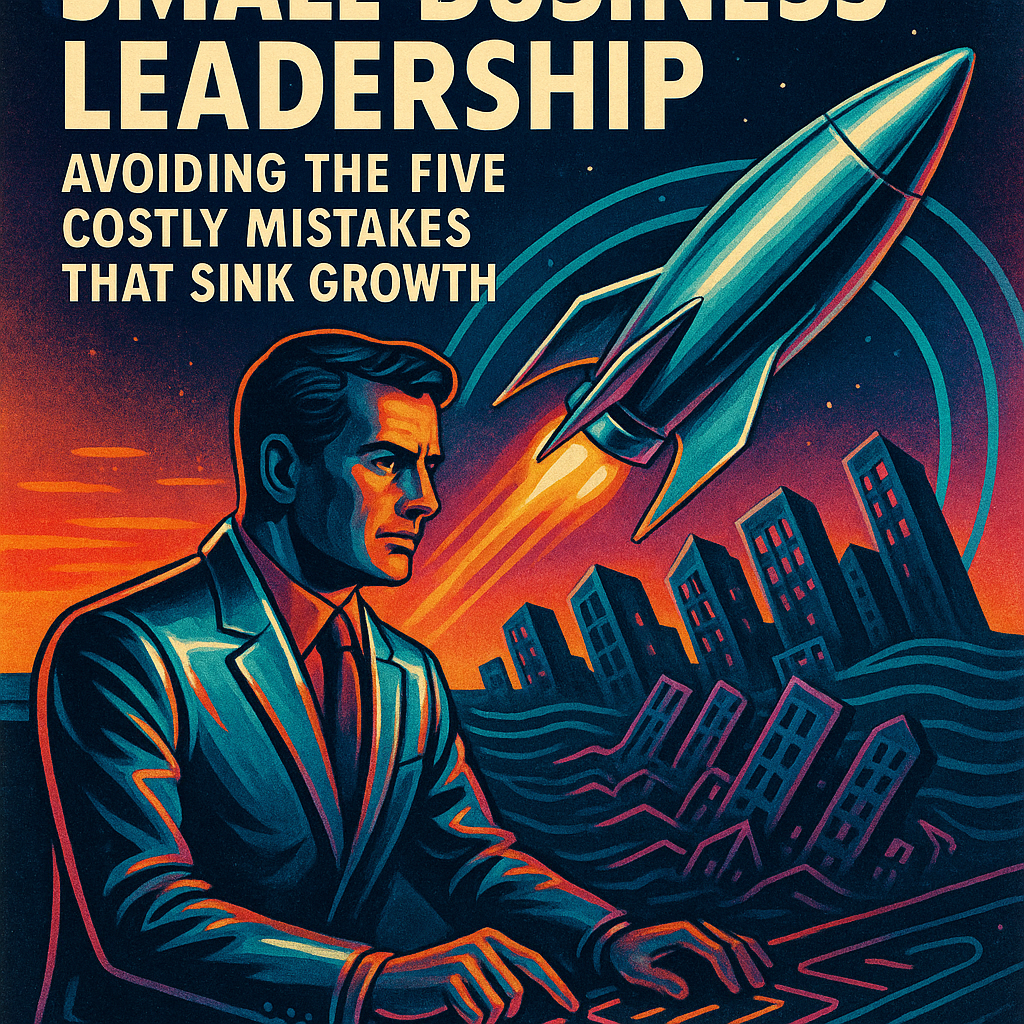
Small Business Leadership: Avoiding the Five Costly Mistakes That Sink Growth
Two winters ago I stood in a cold storage room while my operations manager and I argued over inventory counts. We had over-ordered for a seasonal spike that never came. The result: tied-up cash, a half-full warehouse, and a staff burning hours moving boxes that customers never bought. That misstep revealed a deeper pattern. I was making leadership decisions in silos, based on wishful thinking rather than disciplined processes.
Small business leadership matters because owners make decisions that ripple across finance, operations, and people. Get the basics wrong and growth stalls. Get them right and you build a business that can absorb shocks and scale predictably.
Diagnose the real cause before you act: stop firefighting
When a problem becomes urgent, the natural response is to fix it fast. That often means patching symptoms: cutting a promotion, firing a vendor, or scrambling for cash. Those moves feel decisive but they rarely stop the next fire.
Instead, take thirty minutes to ask three questions: what changed, who owns this area, and what data show the failure point? Document the answers. A quick diagnosis prevents repeated fixes and forces you to create a durable change.
I found that our inventory problem started with a broken re-order trigger and an incentive plan that rewarded volume instead of turns. Fixing only the order quantities would have let the next season repeat the same mistake.
Build simple, repeatable processes that surface risk early
Processes do not have to be complex to be useful. Start with the tasks you do most often: ordering, hiring, scheduling, and cash forecasting. Write step-by-step instructions that anyone on the team can follow. Test them for a week and then refine.
Create two short, recurring checks. One is tactical: a weekly 15-minute review of inventory turns, outstanding invoices, and labor hours. The other is strategic: a monthly review that asks whether your assumptions about customers, pricing, or seasonality still hold.
Those two practices catch small deviations before they become crises. In our shop the weekly review flagged slow SKUs within 30 days, allowing us to discount intelligently rather than panic-sell at the end of the season.
Protect your cash deliberately: treat it like the scarce resource it is
Cash is oxygen for a small business. When cash gets tight, every decision becomes harder and stress rises. The most common mistake is to assume future sales will rescue present shortfalls.
Adopt three practical rules. First, build a 60-day cash forecast and update it weekly. Second, negotiate payment terms with your largest suppliers so you have breathing room. Third, tie discretionary spending to cash thresholds. If runway drops below a set level, pause nonessential hires and marketing tests.
Those rules sound conservative, but they free you to make better long-term bets. We avoided a payroll shortfall because our forecast showed a seasonal dip six weeks out. That gave us time to pull a small promotion and tighten hours rather than take a loan at an emergency rate.
Hire for capability, not charisma, and manage for clear outcomes
Small teams amplify both talent and weakness. Hiring based on chemistry alone creates gaps when the work gets hard. Instead, define the one or two outcomes each role must deliver in the next 90 days and hire to those outcomes.
During interviews ask candidates to describe a specific problem they solved that matches your outcome. Check references for examples of reliability and follow-through. Once on board, give new hires a ninety-day plan with clear deliverables and weekly check-ins.
Management in small businesses should prioritize clarity. Replace vague directives like “own the customer experience” with measurable tasks: reduce average response time to two hours, resolve 90 percent of complaints within one week, or achieve a 15 percent repeat-purchase rate from trial customers.
Use simple metrics that force honest conversations
Too many owners chase vanity metrics that flatter rather than inform. Revenue growth looks good on paper while margins and cash bleed out. Choose a handful of metrics that matter to your model and review them frequently.
For most small businesses, those metrics include gross margin, cash runway in weeks, customer acquisition cost, and churn or repeat rate. Display them in a shared dashboard and review them in your weekly tactical meeting.
When a metric trends the wrong way, ask three follow-up questions: what changed, what did we do, and what will we stop doing this week? That keeps conversations tactical and prevents blame cycles.
Midway through our turnaround I started sending a one-page scorecard to the leadership team every Monday. The scorecard stopped debates and replaced them with focused actions. If margins fell, we looked at pricing or supplier cost, not personality.
Learn to step back: the leader’s job is to design the system
Owners who stay in the weeds limit the business. Your most valuable contribution is designing the system that produces the results you want. That means delegating decisions, documenting processes, and creating feedback loops.
A practical way to start is to block one morning a week for systems work. Use it to write or update one process, hold a short training, or redesign a reporting template. Over time those small investments compound.
If you struggle to let go, begin by delegating one decision with clear guardrails. For example, allow a manager to commit up to a fixed dollar amount for supplier purchases if they maintain a target inventory ratio. You will see whether they follow rules and gain confidence to delegate more.
Mid-article note on leadership: good teams need signals from the top that structure matters as much as speed. For an example of concise frameworks that help leaders build reliable organizations, study practical resources on leadership: leadership.
Closing insight: small changes, sustained discipline
Big turnarounds rarely start with dramatic moves. They begin when an owner chooses to stop reacting and to adopt simple routines that reveal risk early. Diagnose clearly, build repeatable processes, protect cash, hire for outcomes, and measure what matters.
Those five shifts cost little to implement and return outsized stability. If you can make disciplined choices before the next crisis, you will find growth becomes less risky and more repeatable. Your role as a leader moves from crisis manager to system designer, and that is where lasting businesses are built.