Author: Random Roanoke

  • Operational Lessons for Small Businesses: What a Two-Day Supply Shortage Taught a Local Shop

    Operational Lessons for Small Businesses: What a Two-Day Supply Shortage Taught a Local Shop

    Operational Lessons for Small Businesses: What a Two-Day Supply Shortage Taught a Local Shop

    On a wet Tuesday in late spring a small storefront bakery in a Virginia town ran out of flour mid-morning. The supplier had delayed a truck, three large catering orders waited, and the owner found herself answering a ringing phone while trying to improvise a menu change. Customers left. Staff panicked. Sales stalled.
    That two-day interruption did not close the business. It exposed weak spots that any small or medium enterprise can fix quickly. If you run a business you will face similar disruptions. The question is whether your operations make those moments manageable or disastrous.

    Diagnose the real problem: inventory, cash, or process

    Most owners assume a stockout means they need a second supplier. Often the root cause sits elsewhere. For the bakery the delivery missed because an invoice had not posted in the supplier portal. The supplier held the truck until billing issues cleared. That points to a process failure, not just supply.
    Start with a short post-mortem after any disruption. Ask three clear questions: What failed first? Who noticed it? What decision followed? A ten-minute debrief with staff will reveal whether the breakdown was inventory forecasting, billing, staffing, or a communications gap.
    Fixing the right problem costs less. Reordering a second supplier can mask poor invoicing controls. Tighten the simple processes before you add redundancy.

    Build short-cycle contingency plans that actually get used

    Contingency planning should not live in a drawer. Create small, testable playbooks for the things most likely to go wrong in your business. For the bakery the team created three one-page plans: supplier delay, power outage, and key staff absence. Each plan tells one person what to do first and lists two immediate actions the team can take in the next 30 minutes.
    H3: Keep plans tactical and executable
    If your playbook requires more than five steps in the first hour you will not use it. Focus on two objectives: keep customers informed and keep revenue flowing. That means rerouting orders, adjusting the menu, or offering limited substitutions rather than trying to replicate full capacity instantly.

    Cross-train people and preserve institutional memory

    Small teams often run on tribal knowledge. When that knowledge sits with one person you become fragile. The bakery relied on one buyer who handled ordering, billing, and supplier relationships. When she took an emergency day off the billing missed and the truck did not come.
    Cross-training solves that. Rotate responsibilities weekly so at least two people know how to place orders, check invoices, and contact vendors. Document the steps in a short checklist stored where everyone can access it. Use simple tools. A printed checklist pinned in the back room works as well as software for teams that prefer low tech.
    Cross-training also reduces stress for employees. When people see others can cover their role they feel safer and stay calmer during a disruption.

    Use customer communication as an operational lever

    Customers judge you by how you respond, not by the problem itself. During the two-day outage the bakery sent a single social post late in the day. People felt ignored.
    Establish a quick communications rule. When an operational failure affects customers, post a short update within an hour. State what happened, what you are doing, and a realistic estimate for the next update. Use email for regular clients and a pinned post or sign for walk-ins.
    Framing matters. A concise, honest update lowers frustration. It also buys time to fix internal issues without reputational damage.

    Balance redundancy with cost sensitivity

    Redundancy costs money. You can afford a second supplier, extra stock, or backup equipment only if you measure the cost versus the expected risk. Instead of stocking twice the inventory, the bakery negotiated two changes. First they secured a secondary local supplier with a one-hour fill policy for critical items. Second they agreed to keep a rolling emergency kit that covered two days of high demand for the most used ingredients.
    Calculate the real cost of failure. Add lost sales, trapped labor time, and reputational harm. Compare that to the carrying cost of redundancy. Often a small investment in a targeted backup yields a large reduction in disruption risk.

    Make leadership visible in the moment

    When operations go sideways people need a calm, visible leader. In the bakery the owner stayed in the back office handling logistics while employees faced customers. That absence amplified uncertainty.
    Leadership in a crisis looks like presence. Walk the floor. Explain decisions. Delegate a staff member to handle customer updates while you fix the supply chain. If you model calm problem solving your team mirrors that behavior.
    For practical frameworks on leading through operational pressure consider readings and resources that emphasize clear priorities, delegation, and routine after-action reviews. This kind of steady approach keeps your team aligned when the unexpected happens. For an example of thinking focused on leadership, see this resource on leadership.

    Close the loop with short learning cycles

    After the bakery recovered they held three short meetings over the next week. The first captured facts. The second redesignated responsibilities. The third updated the contingency checklists. Most importantly they set one metric to watch: the percentage of supplier orders confirmed within 24 hours. That metric rose quickly once responsibilities split across two people.
    Small business resilience does not come from heroic effort. It comes from simple routines practiced until they become habits. Diagnose failures honestly. Keep plans short and actionable. Cross-train staff. Communicate quickly with customers. Invest only in redundancy that makes economic sense. Show up as a leader when things get hard. Then measure whether your steps made a difference.
    If you finish with one change this week make it the post-mortem. Ten minutes, three questions, one owner and one delegated action. You will see the benefits the next time a truck is late.
  • Small Business Leadership: Three Operational Lessons I Learned Running a Local Shop

    Small Business Leadership: Three Operational Lessons I Learned Running a Local Shop

    Small Business Leadership: Three Operational Lessons I Learned Running a Local Shop

    When my partner and I took over a tired storefront on Williamson Road, we thought the hard part was building customers. We were wrong. The real work lived in the daily operations: predictable inventory failures, a seasonal payroll squeeze, and a leadership vacuum every time I stepped out for a meeting.
    Small business leadership mattered more than our marketing or pricing. It determined whether a slow week became a crisis or just a learning moment.

    Tight inventory controls that match your cash flow

    We entered the first summer with excess stock we could not move and a supplier bill that arrived before the cash did. I stopped ordering on autopilot and began two simple practices.
    First, set reorder points by cash, not just by sales. Translate the reorder threshold into a dollar amount you can comfortably pay when the invoice hits. That single change prevented a recurring cycle where inventory sat unsold while payroll squeezed us.
    Second, review inventory weekly in 15-minute huddles with a manager. Make the meeting specific: three SKUs to push, two to discontinue, and one local supplier to explore. These micro-decisions add up. They shrink carrying costs and give staff clarity about what to promote in-store.
    When cash tightens, you will not fix it with optimism. You fix it with rhythm and discipline.

    Build a seasonal staffing plan that protects margins

    Our busiest months came like clockwork. We hired fast and fired faster when demand fell. That roller-coaster burned through time and morale.
    I developed a staffing plan tied to predictable seasonal signals. Start with historical sales by week, then overlay local events and weather patterns. That model told us where we actually needed people and where we could rely on cross-trained staff.
    Cross-training matters more than headcount. Train one person to handle the register, restock, and basic repairs. Train another to do bookkeeping basics. That allowed us to flatten peaks without costly temp hires.
    Finally, create two simple payroll rules: a minimum shift length to avoid constant turnover and a flexible shift block for tight weeks. Those rules keep labor predictable and keep margins from bleeding when the calendar flips.

    Put structure around decisions so your team can act without you

    Early on I made two mistakes. I decided too much and documented too little. Staff waited for my call. That dependency meant every small problem escalated into a major interruption.
    We adopted decision templates. Each template answers three questions: who decides, what information they need, and what outcome counts as success. For example, the restock template empowered a floor supervisor to reorder up to $1,000 of fast-moving items if inventory turned below the cash threshold. The template specified the report to attach and the approval route for larger amounts.
    Decision templates do two things. They speed up response times and they train people in judgement. When the business faces a surprise, your team will act instead of waiting.

    How to build a simple template

    Write the decision in one sentence. Add two required data points. End with the boundary lines for approval. Keep it one page.
    We pinned these templates near the register and on the shared drive. Within two months, the number of issues that required my input dropped by half.

    Midstream adjustments that kept us solvent

    We also learned to make pragmatic mid-course corrections instead of chasing perfection.
    One winter we saw a sudden spike in utility costs. Rather than promise customers a big sale, we examined three levers: trimming weekend hours when traffic dropped, renegotiating a route with our distributor, and shifting a portion of offerings to higher-margin, locally sourced products. Each move tightened the equation without dramatic cost or risk.
    These adjustments share a pattern. Make cheap, testable changes. Measure the result for one pay period. Keep what works, discard the rest.

    The leadership habit that changed everything

    At the moment that changed our business, I stopped treating leadership as a title and made it a daily habit.
    Every morning I spent 20 minutes on the floor listening. I asked one operational question and one personal question. The operational question focused on the previous shift: what went well and what blocked you? The personal question asked what support they needed. This rhythm did more than collect data. It built accountability and empathy.
    If you want to sharpen your own small business leadership, start there. Show up. Ask two clear questions. Make one small change that day and measure it.
    Midway through our second year, those small habits let us weather a supplier delay, a cold snap that cut foot traffic, and a local event that doubled our sales for a weekend. We did not survive because of a marketing plan. We survived because the system made sensible responses simple.

    Closing insight: make operating survival boring

    The goal is not constant drama. The goal is boring reliability. When inventory moves predictably, staff know what to do, and decision rules exist, you convert surprises into manageable problems.
    Practice three things this week: translate reorder points into dollar budgets, schedule one cross-training session, and write one decision template. These actions force your leadership to show up in the day-to-day. They will not feel glamorous, but they will keep your doors open and your team steady.
    For a practical primer on developing consistent managerial habits and improving team decision-making, study proven work on workplace systems and leadership.
    When you finish these steps, you will stop reacting and start running your business the way the numbers and people expect. That difference is real and it compounds faster than any advertising spend.
  • Costly mistakes small businesses make — five fixes that actually work

    Costly mistakes small businesses make — five fixes that actually work

    Costly mistakes small businesses make — five fixes that actually work

    I remember the winter we lost a quarter of our revenue because we treated forecasting like a hopeful guess. The problem was not that sales dipped. The problem was we had no plan for a dip. That blind spot cost payroll, vendor trust, and two good hires.
    Costly mistakes small businesses make are rarely dramatic. They creep in as small decisions that compound. This piece walks through five recurring errors I have seen in multiple shops and the concrete fixes that stop the next avoidable loss.

    Misreading cash flow as the same thing as profit

    Many owners look at a profitable month and feel safe. They forget profit is a snapshot while cash flow is the rhythm of the business. Payables and receivables often fall out of sync. A busy month with slow collections becomes an operational crisis.
    Fix: adopt a rolling 13-week cash forecast and update it weekly. Track the actual cash balance against the forecast and force three decisions when the variance exceeds 10 percent: shift payments, accelerate collections, or postpone nonessential spend. The process is simple. Do it with a sheet and a single owner sign-off. The discipline matters more than the tool.

    Pricing by habit rather than by cost plus market

    Owners frequently raise prices when they feel desperate and cut them to chase volume. That behavior erodes margins and trains customers to wait for discounts. Pricing needs to reflect cost, value, and scarcity, not emotion.
    Fix: calculate your true landed cost for your core products and services. Add the contribution margin you need to cover fixed overhead and desired reinvestment. Then benchmark with three local competitors and adjust for unique value you deliver. Make a small, staged price change once a quarter instead of reactive swings. Test in one region or customer segment before rolling out broadly.

    Hiring to patch a problem rather than build capability

    A typical mistake: hire for immediate grunt work and expect the new hire to scale into responsibility. That often leaves the role undertrained and the team brittle. Turnover follows and institutional knowledge walks out the door.
    Fix: define the role as capability plus outcomes before you post the job. Write three measurable outcomes you expect in the first 90 days and the 12-month competencies you want. Hire for potential where necessary but pair the hire with a 60-day training plan and an internal mentor. This reduces the chance you’ll keep hiring to fix the same problem.

    Ignoring simple process documentation

    Small businesses trade speed for chaos when processes live only in people’s heads. That becomes painfully obvious when someone is sick, quits, or when a seasonal surge arrives. The resulting mistakes cost customers and morale.
    Fix: capture eight to ten core processes that touch customers or cash. For each, record the steps, the decision points, and the owner. Keep each process to one page. Store them in a single folder and review quarterly. The work is not about bureaucracy. It is about ensuring that a competent person can reliably do the work when needed.

    Treating leadership as a fixed personality trait instead of a practice

    Leaders who expect people to simply follow instructions create dependence and slow reaction time. In many small firms, the owner becomes the bottleneck because the team lacks the authority or clarity to act. That creates burnout and lost opportunities.
    Fix: practice distributed authority in three small moves. First, name decisions that anyone can make without permission. Second, document the thresholds that trigger escalation. Third, coach one person a month on decision-making with real problems, not theory. Over time this approach builds resilience and improves morale.

    Why the fixes matter together

    Each of these mistakes compounds the others. Weak processes make hiring harder. Poor cash forecasting leads to panic pricing. A team waiting for the owner causes missed opportunities and fatigue. Fixes aligned to cash, people, and process reduce variability and protect both margin and reputation.
    Midway through implementing these changes you will confront the awkward balance between control and trust. That is where practical leadership shows up. If you want a short primer on developing the muscle to decentralize decisions and hold teams accountable, reading on leadership can be surprisingly effective. leadership

    Simple first steps to get started this quarter

    Start with one outcome and one accountable owner. Pick the weakest area you can fix in 45 days. For most firms that is cash forecasting or process documentation. Set two measures you can check weekly and two small consequences for missing them. For example, if forecast variance is above 10 percent for two weeks, pause nonessential hiring and review receivables.
    Progress compounds. A reliable forecast makes pricing decisions calmer. A documented process speeds onboarding. A trained decision-maker prevents bottlenecks. Small wins build the operational runway you need to grow without repeating old mistakes.

    Closing insight: make preventable failure visible

    The single most valuable habit I adopted was making preventable failures visible in a short weekly meeting. We called out one near-miss and one avoidable error. We asked two questions: what caused it and what one change stops it from happening again? That meeting cost 20 minutes and saved months of rework.
    Costly mistakes small businesses make are not mysterious. They are patterns. The path out of them is methodical: measure cash, price deliberately, hire for outcomes, document process, and practice distributed authority. Fix those five things and you will be less surprised by setbacks and better able to use the resources you have.
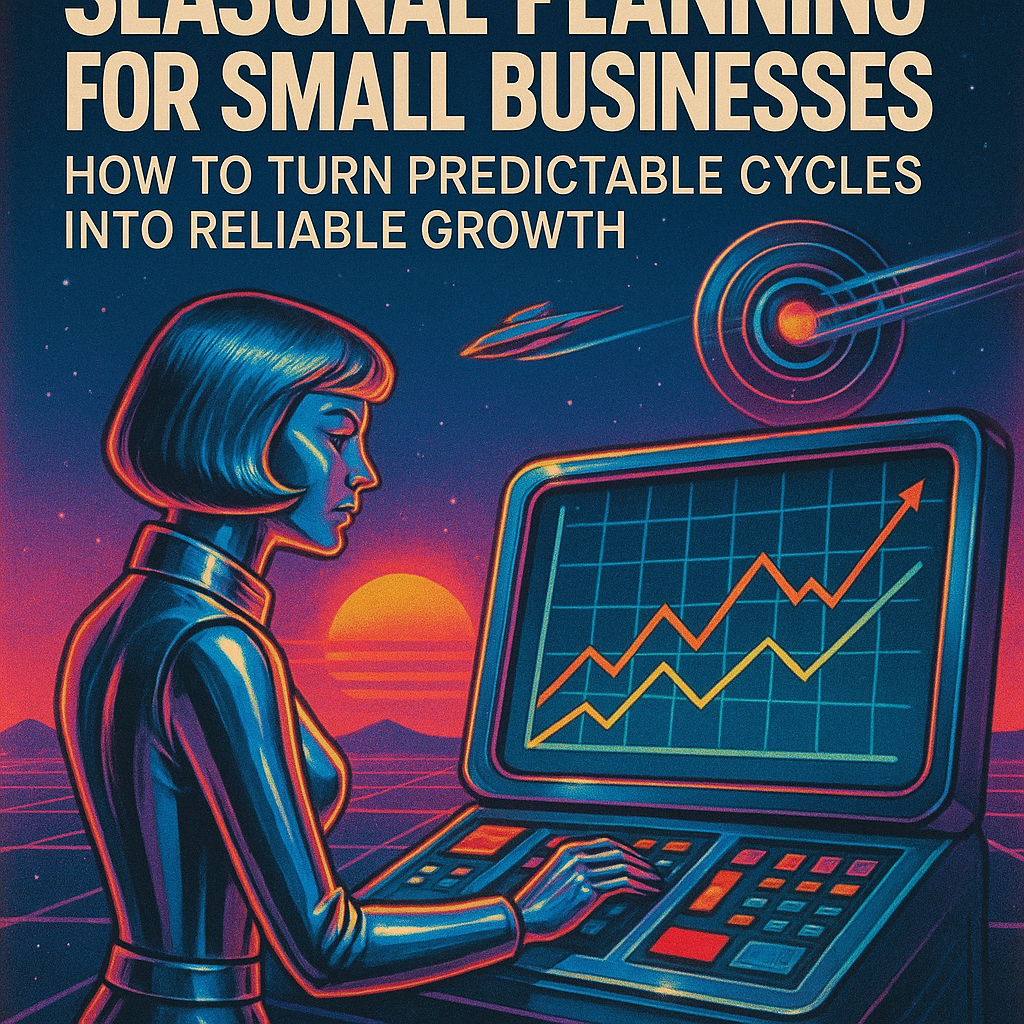
  • Seasonal Planning for Small Businesses: How to Turn Predictable Cycles into Reliable Growth

    Seasonal Planning for Small Businesses: How to Turn Predictable Cycles into Reliable Growth

    Seasonal Planning for Small Businesses: How to Turn Predictable Cycles into Reliable Growth

    Two winters ago I watched a family-run café in Roanoke stack half its staff for January and then scramble in April when a late thaw brought customers back three weeks early. The owner had treated the slow season like a problem to survive rather than an operational lever to manage. That mismatch cost payroll, inventory, and morale.
    Seasonal planning for small businesses changes that. It treats predictable swings as processes you design for, not surprises you react to. The payoff comes in steadier cash flow, smarter hiring, and inventory that fits real demand.

    Diagnose the seasonal rhythm in plain numbers

    Start with a simple table of monthly revenue, labor hours, and key expenses for the last 18 months. If you do not have 18 months, use what you have and mark gaps. You need to see patterns, not guesses.
    Plot revenue and a single variable cost, like hourly labor, on the same chart. Look for lead indicators: does labor lag revenue, or does inventory order timing force you to predict far in advance? You will spot three things quickly: true season length, peak intensity, and lead time for suppliers or hiring.
    Hunt for one anomaly per year. A one-off event can disguise the pattern. Adjust your model for that event and recompute monthly averages.

    Align operations to the cycle: staffing, inventory, and cash

    Staffing
    Hire for flex, not fill. Shift fixed headcount decisions away from peak staffing needs. Build a core team for operations and a flexible roster you can scale by 10 to 30 percent. Train the flexible group on two critical tasks only. Cross-trained generalists keep service steady without carrying full-time payroll during slow months.
    Inventory
    Match order cadence to shelf life and supplier lead time. If a supplier needs 60 days, order for the upcoming peak two months earlier. Keep a safety buffer based on the worst single-month miss in the last three years. That buffer should be a number of days of supply, not a percentage of inventory value.
    Cash flow
    Translate seasonal swings into a rolling 12-week cash forecast. Move any discretionary spend into the high-cash weeks. When revenue will peak, schedule capital maintenance and bulk purchases. During slow periods, negotiate payment terms with suppliers and stagger fixed expenses where possible.

    Build demand—and hedge it—using three practical tactics

    Tactic 1: Shift demand with offers that reduce seasonality
    Create small, low-cost incentives timed to the shoulder months. For a retailer, bundle complementary items and extend a mild discount for mid-season shoppers. For a service business, offer weekday appointment credits redeemable later. These incentives should trade margin for utilization, not for long-term price expectations.
    Tactic 2: Short-term partnerships
    Identify local non-competing businesses with opposite seasonality. A garden center and a café can exchange visibility during each other’s slow spells. Formalize a simple revenue-share or referral credit so both sides benefit immediately.
    Tactic 3: Prepaid packages and subscriptions
    Introduce a prepaid product that smooths cash flow. It can be a maintenance package sold in winter for services delivered across the year. Make terms explicit and conservative so you do not overpromise during peak months.

    Use operational routines to prevent seasonal emergencies

    Weekly cadence
    Create a weekly review focused on three metrics: booked demand for the next 30 days, cash runway for the next 12 weeks, and inventory days on hand for critical SKUs. Keep the meeting to 20 minutes and limit attendees to those who make decisions.
    Scenario drills
    Quarterly, run a two-hour drill: what happens if the peak arrives four weeks early? Or if a supplier misses a shipment? Assign roles and write the playbook decisions into your operations manual. The benefits come from reducing the time between problem and response.
    Leadership and buy-in
    Seasonal plans fail when leaders do not reinforce them. Share the numbers with your core team and show how small adjustments—one fewer overtime shift, one inventory tweak—change the bottom line. If you want frameworks to guide these conversations, look at external resources on leadership. That reading will help shape how you hold steady through predictable swings.

    Close with a practical weekly task

    This week, pull three months of payroll, revenue, and supplier lead times. On Friday, score each month from 1 to 5 for predictability. Use that score to pick one change you can implement next week: adjust a reorder point, add a part-time shift, or negotiate net-45 payment terms. Small tests reduce risk and build confidence.
    Seasonal planning does not remove volatility. It changes the relationship you have with it. Treat cycles as inputs you can measure, plan around, and in some cases, reshape. Do that and you will stop being surprised by January and start using it to get ahead.
  • Seasonal planning for small businesses: how a tough winter taught one owner to build a predictable year

    Seasonal planning for small businesses: how a tough winter taught one owner to build a predictable year

    Seasonal planning for small businesses: how a tough winter taught one owner to build a predictable year

    I remember the January when a Roanoke downtown boutique owner called me, voice tight, inventory spreadsheet glowing on the screen. She had bought imported stock in late fall, assumed steady demand, and then a mix of tariffs and a colder-than-expected winter cut foot traffic in half. By February she faced a cash squeeze and the painful option of raising prices or trimming staff.
    Seasonal planning for small businesses matters because weather, policy, and local demand create predictable swings. If you only react, you compound risk. If you plan, you smooth cash flow, protect margins, and make better hiring and ordering decisions. This article lays out four practical, field-tested moves to turn seasonal volatility into a manageable rhythm.

    Diagnose the real seasonality in your business

    Many owners mistake noise for seasonality. A one-off cold snap or a temporary supplier issue looks like a trend if you have only a single year of data. Start by building a simple baseline. Pull sales by week for the last three years if available. If you do not have three years, use whatever you have and mark the data limitations.
    Look for recurring patterns, not single events. Does demand drop the same weeks every year? Do certain product categories move independently of overall sales? Mark anomalies like a local festival or a supply shock separately so they do not distort your baseline.
    Hose down assumptions. Inventory that sells in spring may not perform the same week every year. Anchor decisions to the pattern you find rather than to memory.

    Build a seasonal cash-flow calendar and act on it

    A calendar that maps cash inflows and outflows changes how you order and hire. Slot payroll, inventory receipts, rent, loan payments, and major marketing campaigns onto a month-by-month calendar.
    Then identify the tight months. For each tight month write three actions you can take in advance: defer nonessential purchases, accelerate accounts receivable, or negotiate a short-term line of credit. These are practical levers you can pull before the pinch arrives.
    H3: Practical ordering rule
    Adopt a three-tier ordering rule. Tier one are core products you always stock. Tier two are seasonal variants you order only if trending upward four weeks before peak. Tier three are experimental items ordered in small quantities. This rule reduces excess inventory in slow months and prevents stockouts in peak months.

    Price deliberately around seasonality, not emotionally

    Owners often raise prices in a panic or discount too deep to clear inventory. Instead, pick a price strategy tied to your calendar. Use smaller, planned price increases before cost spikes you can see coming. Use targeted markdowns only in pre-determined clearance windows.
    If costs jump because of external policy or freight, spread the increase over time. Communicate changes through simple signage and staff talking points so customers understand the reason without feeling sold to.
    This kind of deliberate approach protects margins while keeping trust intact.

    Staff the business with ramp-up and ramp-down playbooks

    Labor is the most expensive variable cost for many small businesses. Build simple playbooks for bringing staff up and down. A good playbook covers scheduling, cross-training, and temporary help sources.
    Cross-training reduces your need to hire during short peaks. Train one person to cover point-of-sale, basic stock management, and a second to handle light merchandising. When peaks come, you redeploy instead of bringing on new hires.
    Keep a short list of vetted temporary workers you can call. Maintain that list during slow months by offering occasional paid shifts. It keeps people engaged and reduces the lead time when you need help.

    Use local signals and community rhythms to refine forecasts

    Local events shape small-business seasons more than national averages. Track town calendars, school schedules, and nearby construction. Talk to adjacent businesses about their expected spikes. These local signals help you adapt the baseline into a working forecast.
    If a state policy or a new local employer changes employment numbers, update your forecast immediately. Leadership in small organizations means folding new information into routines fast. Embed a regular review cadence so forecasts stay current.
    Midway through an unpredictable year I linked our weekly review to a short list of decision rules. One rule read: if four-week sales deviate by more than 15% from forecast, trigger a two-step response — adjust orders for the next four weeks and update staff schedules. That single rule cut reactive scrambling by half.

    Closing insight: make seasonality your operating rhythm

    Seasonal planning for small businesses stops being a yearly exercise when you make it an operating rhythm. That rhythm looks like a simple loop: observe, forecast, act, review. Treat each quarter as a planning unit and each week as an operational check.
    You will still meet surprises. You will still have hard winters. The point is not to eliminate variability. The point is to build predictable responses so you make fewer urgent, regrettable decisions. When you approach the calendar this way, you trade crisis for choice.
    If you want one behavioral change to start today, set a recurring 30-minute weekly review with your core numbers and one calendar check. Over a season that habit keeps your business responsive and reduces the odds that cost shocks force last-minute, costly moves. For more on aligning teams and decisions under pressure, study how small-business leaders develop consistent leadership habits and you will find practical frameworks you can adapt locally.
    That winter in Roanoke taught a clear lesson. The owner who rebuilt her ordering cadence and set a weekly review reclaimed margin and time. She kept staff and kept customers. Seasonal planning did not make her immune to shocks. It made them survivable.
  • Five Costly Mistakes Small Businesses Make — and How to Fix Them

    Five Costly Mistakes Small Businesses Make — and How to Fix Them

    Five Costly Mistakes Small Businesses Make — and How to Fix Them

    I stood in a cramped back office of a local manufacturer the week before a major trade show and watched the owner panic. Orders were late. The routing slips disagreed with the production board. The rep who handled wholesale had stopped returning calls. This scramble was familiar. It traced back to five mistakes that repeat across sectors and scale. If you run a small or medium business in Virginia, spotting these early keeps a bad week from becoming a bruising year.

    Why these costly mistakes small businesses make keep owners awake

    Most of the problems start small: a spreadsheet error, one overcommitted employee, or a customer expectation that wasn’t written down. Left unchecked, these become operational leaks. The costs show up as lost revenue, higher churn, and staff burnout. The good news is you can stop them with simple, practical changes you can implement this quarter.

    Mistake 1 — Relying on tribal knowledge instead of documented processes

    I’ve seen companies that run because one person remembers the steps. When that person is sick or leaves, the whole line stumbles. Documented processes reduce single points of failure. Start by mapping the five most critical workflows: order intake, invoicing, hiring, inventory reconciliation, and customer issue resolution.
    How to fix it now
    • Spend two hours this week writing the steps for one critical process. Keep it short and clear.
    • Ask a colleague to follow the steps and note where they get stuck. Iterate once.
    • Store the document where any team member can find it and time-stamp updates.
    These steps cut errors and make onboarding faster.

    Mistake 2 — Treating cash flow as an afterthought

    Revenue does not equal cash. I worked with a retail owner whose sales looked healthy until bills arrived. Net 30 invoices, slow returns, and a large seasonal inventory buy left them short. Small businesses fail when they cannot bridge timing gaps between payables and receivables.
    How to fix it now
    • Build a simple 90-day cash forecast. Update it weekly.
    • Offer a small discount for faster payment on recurring B2B invoices if margins allow.
    • Negotiate at least one extended term with a supplier before you need it.
    A visible forecast turns surprises into manageable decisions.

    Mistake 3 — Hiring too slowly or too quickly

    Hiring mistakes cost more than a bad hire’s salary. Hiring too slowly leaves teams stretched and causes quality issues. Hiring too quickly brings mismatch and turnover. The right rhythm comes from standardizing the hiring process and tracking a few metrics: time-to-fill, first-90-day retention, and manager satisfaction with new hires.
    How to fix it now
    • Define the one must-have skill and two nice-to-haves for each open role.
    • Use a short, consistent interview script to compare candidates reliably.
    • Create a 90-day onboarding checklist so new hires can contribute faster.
    This reduces churn and improves team performance.

    Mistake 4 — Ignoring customer signals until they become complaints

    When you hear a single complaint, treat it as a canary in the coal mine. Many owners wait until reviews or churn spike before reacting. The better approach is systematic listening: a short post-service survey, a monthly account check-in for B2B customers, and tracking repeat issues internally.
    How to fix it now
    • Send a one-question survey after each job or sale. Measure the trend weekly.
    • Hold a monthly 15-minute customer review meeting with your team.
    • Track issues in a simple shared spreadsheet and assign an owner for follow-up.
    Responding early keeps customers and cuts the cost of recovery.

    Mistake 5 — Confusing authority with leadership

    Ownership and titles are not the same as leadership. I met a small firm owner who enforced rules but never listened to the people doing the work. Decisions felt top-down and morale slipped. Leadership is practical. It creates clarity, models priorities, and removes obstacles for the team.
    How to fix it now
    • Spend one hour each week with front-line staff doing their work and listening to what slows them down.
    • Ask your managers one question daily: "What is the single biggest thing I can remove for you today?"
    • Publish clear priorities so everyone knows where to focus.
    If you want a short primer on how leadership shows up in daily operations, read this brief guide on leadership that summarizes practical approaches and habits to build stronger teams. leadership

    Closing: small actions, big differences

    These five mistakes are common because they are easy to ignore. The remedy is purposeful, small investments: document a process, update a cash forecast, tighten hiring, listen to customers, and practice leadership. Do one of the quick fixes this week and measure the result. If nothing else, you will reduce surprises. If you do it consistently, you will build a system that keeps your business running when people are busy, sick, or moving on.
    You will know you are getting better when the panic before the trade show becomes a short conversation and a fix, not an all-hands crisis.
  • Costly mistakes small businesses make — three real operational lessons

    Costly mistakes small businesses make — three real operational lessons

    Costly mistakes small businesses make — three real operational lessons

    When the delivery van missed a noon shop opening twice in one week, the owner stood in the doorway and watched customers walk away. That one recurring failure cost more than sales. It damaged trust, stretched staff, and made a profitable day feel like a loss.
    Small business owners see similar scenes every day. The costly mistakes small businesses make rarely come from malicious moves. They come from small, repeated errors in operations. Fixing those patterns improves margins and morale faster than chasing new customers.

    Mistake 1 — treating systems as optional instead of essential

    You can run a business by memory and grit for a while. At some point memory breaks. That is when scheduling conflicts, missed orders, and inventory surprises pile up.
    Start by mapping a single process that trips you up. Choose intake, scheduling, or order fulfillment. Write each step down in plain language. Make the map short enough an employee can follow it without asking questions.
    Next, add a simple verification step. A text message confirmation or a photo sent to a shared channel reduces repeat errors. Verification does not need expensive software. It needs a named person and a one-line rule.
    When you standardize one process, measure it. Track how often the error happens before and after the change. The improvement gives you permission to standardize another process.

    Mistake 2 — ignoring small staffing gaps until they become crises

    A back-of-house employee calling out is not a one-off problem when you have no backup plan. Small staffing gaps cause rushed work, quality drops, and burnout. Those outcomes hit revenue and reputation.
    Plan for coverage before it becomes urgent. Cross-train people for two critical roles. Keep a short, rotating call list of vetted temporary workers. Create a simple checklist for substitutions so someone filling in knows what to prioritize.
    Use short shift overlap windows when possible. Ten minutes of overlap lets the outgoing person hand off context. That prevents fumbled starts and keeps customer experiences consistent.
    H3: A budget-neutral contingency
    You do not need a large contingency fund to prepare. Reallocate one slow-shift hour a week for training and overlap. That hour reduces errors and builds internal capacity.

    Mistake 3 — assuming communication equals clarity

    Leaders often assume they communicated plans clearly because they spoke them. Clarity requires confirming understanding. If you tell a team to “handle the rush,” that instruction leaves room for differing interpretations.
    Use three simple checks. Ask the person to summarize the plan in one sentence. Walk one run with them during a real shift. Follow up with one measurable outcome to watch for that day.
    When you document plans, keep them task-focused. Replace vague phrases with exact actions and timing. For example, change “prepare for delivery” to “stage packages at dock B by 10:30 and confirm package count in the delivery log.” Concrete wording prevents assumptions.

    How leadership turns these fixes into lasting gains

    Operational fixes need steady attention. Leadership that models routine problem solving makes the changes stick. Leaders who inspect systems weekly, not obsessively, prevent tiny failures from growing.
    Good leadership also frames mistakes as information. When a delivery fails, treat it as data about the process. Ask what in the steps failed. Use that answer to change the map rather than to assign blame. That attitude creates a culture where staff report problems early instead of hiding them.
    For examples of practical leadership approaches that push systems improvement without theatrical gestures, study frameworks that focus on simple habits and repeated checks. Those patterns deliver durable results because they match how teams actually work in tight schedules. For further reading on the role of steady, practical leadership in operations, see leadership.

    Quick operational checklist you can use today

    Start with three actions you can complete this week. First, write one process down in plain language and share it with staff. Second, choose two people to cross-train and schedule a 30-minute overlap. Third, pick a single measurable to track for seven days, such as on-time deliveries or order accuracy.
    Each action isolates a common failure and makes it manageable. Taken together they reduce the chance that a small error becomes an expensive problem.

    Closing insight — small fixes compound

    The most costly mistakes come not from dramatic missteps but from small, repeated gaps. Standardize one process, cover one role, and confirm one plan. Those three habits change how your business responds under pressure.
    When you treat operations as a sequence of solvable problems, you stop losing customers to avoidable errors. You keep days profitable and teams steady. That clarity matters more than chasing the next big idea.
  • Small Business Leadership in the Trenches: Four Tactical Lessons from a Crisis Week

    Small Business Leadership in the Trenches: Four Tactical Lessons from a Crisis Week

    Small Business Leadership in the Trenches: Four Tactical Lessons from a Crisis Week

    Three years into running a small manufacturing shop outside Roanoke, I walked into the plant one January morning to find three key people out sick and a truckload of parts stuck at the supplier. In three days we had double the usual orders and half the hands to fill them. I could have worked 18 hours and hoped for the best. Instead I applied a set of practical habits that kept production moving and protected margins.
    This is about small business leadership as a daily practice, not theory. The habits below come from real pressure, where time and money both ran short. Use them to design systems that survive the week when things go wrong.

    Forecast the predictable and plan capacity around it

    Seasonal spikes and supplier slowdowns feel random until you track them. Small businesses often treat forecasting like a spreadsheet exercise. Make it operational instead.
    Keep a simple rolling 12-week forecast that ties sales, staffing, and supplier lead times to schedules. Update it weekly and highlight the top three risks that could derail the plan. When I started doing this, I could see a pattern of higher orders the week after a local trade show and preemptively call suppliers.
    Pair the forecast with capacity rules. Define the minimum staffing to run each shift and what tasks move or pause when you hit that threshold. These rules remove guesswork during busy days and let you redeploy people faster.

    Cross-train to turn specialists into flexible teams

    Specialists keep quality high. They also create single points of failure. Cross-training reduces risk and increases morale when you do it correctly.
    H3: How to cross-train without dropping quality
    Start with a one-week rotation for each role. Focus on three core tasks anyone must perform to keep the operation running. Pair the trainee with a mentor for two weeks and require documented checklists. In my shop, a machine operator learned basic quality checks in two shifts and prevented a major rework when the lead inspector was out.
    Make cross-training part of performance reviews. Reward the ability to step into multiple roles. When sickness hit during that January week, three people who had basic training in scheduling kept orders flowing.

    Create clear decision rules and small authority windows

    When everything speeds up, bottlenecks often sit at decisions. Leaders try to keep control and slow things further. The faster solution lies in small authority windows.
    Write decision rules for common scenarios. For example, allow supervisors to expedite local shipments up to a fixed dollar amount without approval. Let floor leads assign overtime within defined hours. These rules should be written, easy to find, and rehearsed in monthly drills.
    During the crisis week, a written rule let a supervisor call a local carrier and pay a small expedite fee without calling me. The result: one delayed order reached the customer the same day and we avoided a penalty.

    Protect cash and relationships before you need them

    Cash is both tactical fuel and leverage. Build a short list of actions to take when cash tightens and keep supplier relationships current.
    Keep a 30-day buffer of operating cash where possible. When that is not yet possible, identify three non-destructive options to free cash quickly. This might include negotiating a one-time supplier payment extension or consolidating shipments to reduce freight expense.
    Work your supplier relationships proactively. Call your top three vendors twice a year and talk about lead times and problem signals they watch for. Most suppliers appreciate the heads up and will sometimes prioritize orders when they already know you.
    Midway through the January crunch, a supplier advanced one pallet after we shared our forecast and agreed to slightly faster payment terms. That small goodwill move kept a production line running.

    Communicate with clarity and measure outcomes, not intentions

    Under stress, people want to know the plan and their role in it. Communication must be precise and brief.
    Use a short daily huddle with three elements: what changed since yesterday, top three priorities for the day, and any decisions made under authority windows. Keep each huddle to 10 minutes and write the decisions on a visible board or digital log.
    Measure outcomes. Track three operational metrics tied to the crisis you expect. During the busy week, we tracked orders shipped, on-time delivery, and rework hours. Those numbers let us see if temporary fixes caused hidden costs.
    When you close a crisis, document what worked and what did not. Turn that into updates to your forecast, capacity rules, cross-training checklist, and decision templates.
    The human part matters too. A calm tone from the leader matters more than long speeches. People need facts and a clear problem to solve.

    Final insight: systems beat heroism every time

    The instinct to be the hero and save the day works once. Systems let the business survive repeated shocks. Build a simple forecast, cross-train people, write decision rules, protect cash, and communicate measured outcomes. Those five moves free you from last-minute firefighting and let you scale the business without burning people out.
    If you want a short reading list on practical team practices and how leaders convert pressure into repeatable processes, start by looking for short, operational essays that focus on daily routines and problem rules. Strong, steady leadership in small firms shows up in disciplined habits, not in dramatic rescues. For a concise perspective on that approach, read about the role of consistent, everyday leadership in building resilient teams: leadership.
    By designing repeatable responses rather than relying on ad hoc effort, you protect margins and keep customers happy when the calendar, health, or suppliers conspire against you. That is how small businesses move from surviving to scaling.
  • Small Business Leadership That Keeps Shops Open: Lessons from One Winter Week

    Small Business Leadership That Keeps Shops Open: Lessons from One Winter Week

    Small business leadership that keeps shops open: lessons from one winter week

    I learned the hard way what small business leadership looks like during a week when everything that could go wrong did. A frozen pipe, a no-show supplier, and a staff mix-up landed in the same seven days. I did not invent any dramatic rescue. I used straightforward choices that any owner can apply the next time the weather or a supplier breaks a plan.
    This piece breaks that week into practical moves. Read it with your calendar open and consider which of these steps you can harden in your operation this month.

    Start with the rules that save your business

    When the pipe burst I could have chased every detail. Instead I ran my two rules that never change. Rule one: preserve cash to cover 7 days of payroll and essentials. Rule two: protect the customer experience that keeps people coming back.
    Having cash on hand changed my options. It let me call an emergency plumber at night and pay an overtime shift without pausing payroll. It also let me choose a temporary fix that kept the storefront open rather than closing for repairs.
    If you do nothing else, write two rules like these and pin them where you and your managers can see them every morning.

    Delegate decisions before they happen

    A late supplier call cancelled a delivery that our operation depended on. I had one person who knew every workaround and one person who had to call me. We lost an hour because I got pulled into another problem.
    Identify the decisions a supervisor must make when routine inputs fail. Then give them the authority and a short checklist to act. The checklist does not need to be long. For our supplier failures it included three options: use alternate vendor A, reallocate stock B, or change the day’s offerings and post the change at the door.
    When you hand that checklist to someone on shift you remove the bottleneck. They act fast. The customer rarely notices.

    How to train for delegated decisions

    Run two live drills a year where a manager uses the checklist to solve a staged problem. Debrief the choice and document what worked. Store the updated checklist in a shared folder and a paper copy at the manager station.

    Protect your people with predictable pay and flexible roles

    One staff member called in sick on the busiest shift. We had no one cross-trained for her role. The result: a backlog, a stressed crew, and soft complaints from customers.
    Predictable pay makes people more reliable. During that week I honored shift guarantees so staff knew I would not cut hours as punishment for problems beyond their control. I also kept a small pool of trained part-timers who could fill two or three core roles on short notice.
    Cross-training matters more than perfect scheduling. Teach three people each core task. That spreads institutional knowledge and lowers risk when someone cannot work.

    Communicate quickly and honestly with customers

    When you change the menu, the hours, or the process, say so immediately and clearly. We posted an update on our front door and sent a simple message to our mailing list explaining the change and why it mattered to the customer.
    A short honest message keeps trust. Customers give forgiveness for disruption when they see you acted to fix the problem. They get annoyed when they feel surprised or misled.
    This is where tone matters. Keep the message factual. Explain the impact, the temporary nature of the change, and what you are doing to make things right.
    Midweek I wrote a piece on internal expectations and public behavior that shaped our approach to team choices. For a deeper read on how values shape everyday decisions see this resource on leadership. (link: leadership)

    Make small investments that reduce big risks

    We added three inexpensive safeguards the week after the crisis. First, we installed a smart water sensor in the utility room. It cost less than a day of lost sales and it sends an alert to two phones the moment moisture appears.
    Second, we expanded our backup vendor list to include two local suppliers who can deliver within 24 hours. We trade occasional small orders with them so the relationship stays active.
    Third, we documented emergency shifts and posted them on the scheduling board. The schedule shows who can fill which role and which keys each person has.
    Those steps kept us open during storms and supplier delays the rest of the winter.

    Closing insight: plan for the small wins that prevent the big losses

    Leadership for small businesses does not require grand strategy. It requires simple systems that reduce friction when things break. Keep cash for a week of essentials. Write two unchanging rules and share them. Delegate with short checklists and drill them. Cross-train staff so one absence does not collapse a shift. Communicate quickly and plainly with customers.
    Do those things and your business will survive weeks when things go wrong. You will not always feel heroic. You will feel practical. That practicality is what keeps shops open and customers coming back.
  • Small Business Leadership: Three Operational Lessons I Learned During a Supply Disruption

    Small Business Leadership: Three Operational Lessons I Learned During a Supply Disruption

    Small Business Leadership: Three Operational Lessons I Learned During a Supply Disruption

    I learned one of the harshest lessons about small business leadership the week our primary supplier overnighted a three-week delay on a critical part. We had customers booked, staff scheduled, and a marketing push waiting to go. In two mornings the calendar filled with cancellations and confused employees.
    That week forced a choice: be reactive and burn cash, or learn fast and change how we run the operation. What follows are three operational, field-tested lessons that restored stability and improved margins. Each one drills down into specific actions any small or medium business owner can use the next time something breaks.

    Treat contingency planning like budgeting

    Contingency is not an academic exercise. It must live in the operating budget and the weekly rhythm. Start by identifying the two failure modes that would hurt you most in the next 90 days. For a retailer it might be inventory shock. For a local manufacturer it could be a machine outage.
    Assign a dollar value to each risk. Estimate the revenue at stake and the likely mitigation cost. That number becomes the budget line for contingency. If you cannot set aside the full amount, plan tiered responses: low-cost fixes you can deploy this week and higher-cost options that buy more time.
    Operational practice: create a short checklist for each identified failure mode and run the checklist monthly. That keeps the plan current and makes the cost of mitigation visible before a crisis hits.

    Build flex capacity into staffing and inventory

    When the supplier delay landed, my teams worked overtime and still missed deadlines. The real problem was a brittle staffing model and zero buffer inventory. I rewired both.
    Staffing: cross-train two people on every critical function. Cross-training takes time but not money. It increases flexibility and reduces single points of failure. Schedule two shorter overlap shifts each week so knowledge transfers happen during business hours, not after 10 p.m.
    Inventory: stop treating inventory as a line item to be minimized at all costs. For critical SKUs keep a small buffer calculated by demand variance and supplier lead time. Use a simple rolling 60-day average and multiply by the supplier’s worst-case lead time. That yields a safety stock you can justify in a boardroom or bank conversation.
    Operational practice: adopt a weekly red-yellow-green inventory review. Any item in red triggers an order or a plan to substitute.

    Make communication the first-line mitigation

    When operations break, how you communicate matters more than the problem itself. During the disruption we applied a strict communication hierarchy and it stopped the rumor mill inside the company.
    For customers: send one clear message explaining the situation, the realistic timeline, and what you are doing to help. Offer alternatives if possible. The goal is to reduce uncertainty. People will tolerate short delays when they understand the plan.
    For staff: hold short daily standups and post a simple incident status document everyone can read. Keep the status document factual and brief. When employees see transparency, they act more decisively and alignment follows.
    For vendors: escalate early. The supplier who gave us the three-week delay had not realized the downstream cost to our business. Once we explained our exposure, they found an alternate shipment route within days.
    Operational practice: build three templates now—customer notice, staff memo, vendor escalation—that take under 10 minutes to customize and send.

    Use substitutions and local networks before discounting

    Our first instinct was to discount to keep revenue. That muddies margins and trains customers to hunt bargains. Instead we used two alternatives that preserved value.
    Substitute: offer a comparable product with a small upgrade or include a service add-on. The perceived value often exceeds the cost of the substitution and preserves margin.
    Local network: call nearby businesses that sell complementary or substitute items. We made two short barter agreements to fill orders. Barters do not have to scale forever. They solve immediate gaps and preserve customer trust.
    Operational practice: maintain a short list of three acceptable substitutes per core product and two trusted local partners you can call for help.

    A practical checklist to use next week

    1. Identify your top two operational failure modes and assign a monetary exposure.
    2. Calculate a 60-day rolling average for critical SKUs and set a safety-stock target using worst-case lead time.
    3. Cross-train staff on at least two critical tasks and schedule weekly overlap shifts for knowledge transfer.
    4. Draft three one-paragraph communication templates: customer, staff, vendor.
    5. Compile a substitute list and two local partners who can supply or collaborate on short notice.
    Implementing these five items takes a few hours and a small budget. The return: fewer surprised customers, fewer emergency purchases, and more options when a partner fails.

    How leadership choices shape operational resilience

    Resilience is not a spreadsheet. It grows from repeated choices by leaders to avoid brittle systems. In a crisis we tested process gaps, not morality. We learned to make small investments early and to value clarity over spin.
    If you want a compact primer on how teams respond under pressure, look for concise frameworks on leadership that focus on structure and communication rather than personality or hype. One well-organized resource I reference often helped crystallize how to scale incident communications without blowing up the calendar.

    Final thought: design for the next disruption

    Every disruption reveals a predictable set of weaknesses. The work is to translate those weaknesses into repeatable fixes that live inside your weekly rhythm. Small business leadership means building systems that keep good staff engaged, protect margins, and make your customers feel held during the storm.
    When the next supplier delay or equipment failure arrives, you do not need luck. You need a plan you kept simple enough to follow at 2 a.m. and strong enough to hold the business through the weekend.