Blog

  • Small Business Budgeting: What Roanoke Owners Learn When the City Tightens Its Belt

    Small Business Budgeting: What Roanoke Owners Learn When the City Tightens Its Belt

    Small Business Budgeting: What Roanoke Owners Learn When the City Tightens Its Belt

    On a Tuesday evening last month the city budget meeting ran late. Local business owners sat in folding chairs, many of them thinking less about the headline cuts and more about what those cuts would mean for foot traffic, contract revenue, and the predictable timing of municipal payments. That uncertainty is the kind that turns a comfortable month into a scramble.

    Small business budgeting is not an abstract exercise. It is the day-to-day practice of keeping doors open when grant cycles shift, customers spend less, or public priorities change. If you run a small or mid-sized business in Virginia, having a budgeting approach that survives these shocks matters more than a glossy five-year plan.

    Start with a rolling 90-day cash plan, not a yearly wish

    Most owners prepare an annual budget and then put it on a shelf. The businesses that survive municipal squeezes and sudden demand shifts look ahead 90 days and update weekly.

    A rolling 90-day plan focuses on cash flow timing. List guaranteed incoming cash first: signed contracts, outstanding invoices you expect to collect, and committed deposits. Next, place non-discretionary expenses: payroll, rent, loan payments, and critical supply purchases.

    When projections show a shortfall in week six, you get time to act. Common choices are renegotiating payment terms with suppliers, shifting nonessential payroll hours, or bringing forward a small receivable with a short-term financing arrangement. These are tactical moves, not long-term bets.

    Reduce fixed-cost risk by turning some costs variable

    Fixed overhead kills flexibility. In tight budgets, fixed costs like long-term leases, fixed delivery routes, or a full-time in-house marketing team can force immediate cuts in other areas.

    Practical operators look for ways to convert fixed costs into variable costs. That might mean outsourcing a portion of maintenance to a vendor paid per job, hiring part-time or contract labor for seasonal peaks, or switching to pay-as-you-go software plans. Each change reduces the cash you must find in a downturn.

    Make these conversions deliberate. Track the total landed cost of outsourcing versus keeping staff and include transition costs. Often a small increase in unit cost buys you big reductions in risk.

    Price, packaging, and timing: three levers to protect margin

    When revenue threatens to fall, cutting price feels natural but rarely solves the problem. Instead consider packaging and timing.

    Package services to increase perceived value without cutting unit price. Offer a maintenance bundle that locks a customer in for six months at a slightly higher effective rate. Shift billing timing to retain cash sooner. For example, require a modest deposit on scheduling or shorten payment terms for new clients while keeping long-term customers on favorable terms.

    These moves affect relationships. Communicate transparently. Explain the reason for the change and the benefit to the customer. The goal is to preserve margin while keeping trust.

    Use scenario playbooks tied to real triggers

    A budget without triggers is a hope. Create three simple playbooks tied to measurable triggers. For example: if revenue drops 8 percent in a month, enact Playbook A; a 15 percent drop triggers Playbook B; missed municipal payments or contract delays trigger Playbook C.

    Playbook A might pause nonessential ad spend and delay hiring. Playbook B might cut discretionary supplier orders and open negotiations with landlords. Playbook C addresses receivables: prioritize collection, shift to cash-on-delivery on new work, and temporarily freeze capital expenditures.

    These playbooks remove paralysis. Your team knows precisely what steps happen when a trigger flips. Practice them in calm months so execution is fast and unemotional during a real shock.

    Keep a small reserve and a known short-term funding source

    A reserve of one month's operating cash is a minimum. Two months is better for service businesses that rely on contract timing. Reserves buy time to execute playbooks without last-minute panic.

    Equally important is having a known short-term funding source you can access under stress. That might be a line of credit you tested during a quiet month, a relationship with a local lender, or an invoice factoring arrangement you’ve already documented.

    Sourcing capital under duress often costs more. You want the funding option in place before you need it and a clear understanding of the fees and covenants.

    Midway through any financial stress, leadership decisions determine survival. Strengthen those decisions by cultivating sound leadership habits: candid financial reporting, short decision cycles, and visible accountability for cost centers.

    Communicate with stakeholders before they worry

    When budgets tighten because of external pressures, silence creates rumors and panicked customers. Communicate early with suppliers, key clients, and staff about what you see and the steps you plan to take.

    A short, honest message to suppliers can yield extended payment terms. A one-on-one with a key client can move an invoice forward or preserve a contract. With staff, frame actions around protecting jobs and the business. Honest, consistent communication reduces friction and uncovers options you cannot see alone.

    Closing: run the business like you will need to survive next month

    The practical test of any budgeting method is whether it lets you make calm, effective decisions when something goes wrong. For small and mid-sized businesses, that means a 90-day rolling cash plan, deliberate moves to reduce fixed-cost risk, pricing and billing levers that protect margin, simple scenario playbooks tied to clear triggers, and a reserve plus a known funding path.

    If you implement these measures, a municipal budget cut or a delayed contract will be an operational problem, not an existential crisis. You will win back time and options, and that is the core of resilient small business budgeting.

  • Kitchen Remodeling in Roanoke: Avoiding the Costly Mistakes I Learned on an Old Bungalow

    Kitchen Remodeling in Roanoke: Avoiding the Costly Mistakes I Learned on an Old Bungalow

    Kitchen Remodeling in Roanoke: Avoiding the Costly Mistakes I Learned on an Old Bungalow

    When my neighbor decided to gut the kitchen in a 1920s Roanoke bungalow, she thought the hard part would be picking cabinets. Two months and three surprise invoices later she called me. The project stalled over unexpected plumbing moves, a missed permit, and a layout that ate the light and the flow. That renovation taught me several lessons worth sharing before you pull a single cabinet out.

    This article walks through the common, expensive mistakes homeowners make during kitchen remodeling in the Roanoke area and offers practical steps to avoid them. The guidance comes from hands-on project experience and local permitting realities.

    Start with a plan that respects structure and flow

    Too many remodels begin with a Pinterest board and end with a functional disaster. Kitchens must balance circulation, work zones, storage, and natural light. Think first about how you cook, how many people move through the space, and where plumbing and gas lines already exist.

    Measure the existing space. Note load-bearing walls, window locations, and ceiling drops. If you plan to move the sink or range more than a few feet, expect higher costs. Moving plumbing or gas lines frequently triggers structural work and new inspections.

    Sketch a simple work triangle connecting sink, cooktop, and refrigerator. Keep each leg between 4 and 9 feet when possible. That guideline keeps walking to a minimum and prevents the awkward angles that make a sleek kitchen feel cramped.

    Budget for hidden work: electrical, plumbing, and structural

    In older Roanoke homes the wiring and pipes rarely meet modern needs. Adding outlets for counter appliances, under-cabinet lighting, or an electric stove often requires new circuits and a larger electrical panel.

    Expect to upgrade service or add a subpanel if you plan multiple high-draw appliances. Have a licensed electrician evaluate the panel and load before finalizing appliance choices.

    Plumbing surprises are common. Old drain lines can slope improperly or contain cast iron that must be replaced. Replacing or rerouting drains and vents raises both cost and the need for rough-in inspections.

    Factor these items into your budget early. A practical rule is to set aside 15 to 25 percent of your projected remodeling budget for unforeseen mechanical and structural work. That keeps the project moving when those inevitable issues appear.

    Understand Roanoke permits and inspection timelines

    Skipping a permit to save a few hundred dollars can cost you thousands in the long run. Permits prove work meets code and ensure proper inspections. In Roanoke, electrical, plumbing, and structural changes nearly always require permits.

    Start permit conversations early. Draft plans and permit applications often take days to prepare and weeks to approve. Some permit offices have backlog at peak seasons. Allow an extra two to four weeks for reviews when you schedule work.

    Schedule inspections into the timeline. Final inspections must follow rough-in work. If the inspector identifies a problem, you may need to halt finishing work until corrections happen. Plan your contractor schedule and material deliveries around those inspection windows.

    If you are unsure about permit scope, bring a clean set of plans to the building department or ask a licensed contractor to advise. Clarifying requirements early prevents rework and costly delays.

    Sequence the work for efficiency and fewer mistakes

    A smart sequence keeps trades from stepping on each other and reduces damage to finished surfaces. Typical sequence: demolition, rough plumbing and electrical, framing, insulation and drywall, painting, flooring, cabinets, countertops, fixtures.

    Avoid installing floors before cabinets unless you want complicated transitions. Install cabinets before heavy countertop templating to protect floors from damage by crews and materials.

    Coordinate subcontractors so that one crew does not block another. For example, schedule electricians to complete boxes and rough wiring before the drywall goes up. That prevents chasing wires through finished walls.

    Document decisions and material choices in writing. Changes made on site add up quickly. A simple log with dates, who approved a change, and revised prices saves disputes later.

    Choose materials and finishes with lifecycle and maintenance in mind

    A budget-friendly tile may look fine at the showroom but may not hold up to constant prep work. Choose materials that match how you use the kitchen. Porcelain tile resists stains better than natural stone. Prefinished hardwood can scratch in a busy family kitchen.

    Match faucet and finish choices to your water. Hard water in parts of the Roanoke area can discolor some metals and affect aerators. Pick finishes and fixtures rated for your water type.

    Confirm lead times for specialty items like custom cabinets and quartz slabs. Long lead times often become the critical path that delays final completion. Order those items early and track shipping so you can adjust schedules if delays occur.

    Real-world tip: work with experienced estimators and keep a contingency

    Estimating a kitchen remodel accurately requires seeing the walls and utilities. When possible, invite your contractor to view the house in person. Written estimates that list allowances for cabinets, appliances, and finishes make it easier to swap options without changing the whole budget.

    Keep a contingency fund equal to at least 15 percent of the construction budget. Use it only for documented surprises like rotten joists, hidden mold, or unexpected code upgrades. That discipline keeps your overall project from derailing.

    Midway through my neighbor's project, she found a sagging floor and had to add sistered joists. The contingency covered the cost without forcing a redesign.

    If you need local guidance on sequencing, permitting, or realistic estimates, a licensed contractor can review plans and clarify what requires permits and inspections.

    Closing insight: plan for decisions and schedule them early

    Remodels fail when homeowners delay decisions or change finishes midstream. Decide on major items early. Cabinets, countertops, and major appliances should be locked in before framing inspections if you need custom fits.

    Plan monthly checkpoints during the project. Use them to review progress, resolve pending decisions, and confirm inspection dates. That rhythm reduces surprises and keeps trades productive.

    Good kitchen remodeling starts with a practical plan and a respect for what lies behind the walls. Expect surprises, budget for them, and sequence work so inspections and trades fit together. Do that and your final kitchen will work as well as it looks.

  • Small business cash flow management: three mistakes that sink growth and how to fix them

    Small business cash flow management: three mistakes that sink growth and how to fix them

    Small business cash flow management: three mistakes that sink growth and how to fix them

    When my shop lost a major client in August, revenue dropped 35 percent overnight. Payroll was due in five days and our line of credit sat unused because no one had the paperwork ready. I watched good people scramble while I realized we had traded consistent cash practices for optimistic spreadsheets.

    Cash flow is not an accounting problem. It is an operational problem that shows up in hiring, vendor relationships, and day-to-day decisions. Small business cash flow management, done poorly, turns solvable bumps into existential crises. Done well, it gives you options when revenue dips and confidence when you scale.

    Mistake 1 — Treating profit as the same thing as cash

    Owners often celebrate a profitable month while bank balances fall. Invoiced work counts as income, but it becomes meaningless if customers pay late. Inventory purchases, deposits on equipment, and one-time tax bills create timing gaps that profit figures do not reveal.

    Fix: map timing, not just totals. Build a 13-week cash forecast that lists expected inflows and outflows by week. Update it every Monday using actual receipts and current invoices. That forward view shows whether payroll, rent, and vendor payments line up with receipts.

    Implement rules that force reality into the forecast. For example, assume only 80 percent of invoices will land when expected. Assign a probability to large receivables. Those small adjustments convert optimism into usable forecasts.

    Mistake 2 — Overreliance on a single customer or channel

    Relying on one big customer feels stable until it ends. When a major account leaves, many owners discover their margins and operations were structured around that single revenue source. Collections become frantic and concessions multiply.

    Fix: reduce concentration risk with deliberate steps. First, track revenue by customer and channel monthly. If one client represents more than 20 percent of revenue, build an action plan to diversify within 6 to 12 months.

    Second, price contracts to include a churn buffer. If a large account negotiates steep discounts, index a portion of the rate to volume or duration so you preserve margin when you need it most.

    Third, keep a contingency line: a small, pre-approved credit facility or a cash reserve equal to one month of fixed costs. That reserve bridges timing gaps without forcing desperate invoices or layoffs.

    Mistake 3 — Weak collections and payment terms

    Many owners extend terms to close deals and then forget to collect. Net-30 becomes net-60, then net-90. That habit pushes the burden of cash management onto the business instead of the customer.

    Fix: standardize terms and enforce them. Make terms part of the sales script. Require a deposit for new accounts and tiered deposits for larger projects. Use simple incentives: a 1.5 percent discount for payments within 10 days or a fixed late fee after 30 days.

    Technology helps. Automate invoices and reminders. Use templated follow-ups and escalate to a phone call after 15 days. If you work B2B, consider a short onboarding checklist that captures billing contacts and preferred payment methods. That single administrative detail prevents months of delay.

    When to escalate collections

    If a client moves past 60 days, pause future work until payment clears. That is a hard conversation, but continuing to deliver services without payment trains customers to pay late. If pause isn’t possible, get a signed payment plan with clear dates and consequences.

    Operational habits that protect cash flow

    Create predictable routines. Run a weekly cash review with operations, sales, and accounting. Share the 13-week forecast and identify one next-best action to improve cash position. Assign ownership for each action and follow up the next week.

    Trim predictable leaks. Review recurring subscriptions and vendor contracts every quarter. Small services add up. Negotiate annual contracts to shift seasonality or convert fixed fees into usage-based billing when possible.

    Invest in simple internal controls. Require two signatures above an agreed spend threshold. Match purchase orders to invoices before payment. These steps slow reckless spending and reduce surprises.

    Embed cash thinking into hiring and purchasing. When hiring, model the 90-day cash impact. For equipment purchases, model total cost of ownership and not just the sticker price. Those calculations make growth decisions less emotional and more operational.

    Midway through a recovery, we rewrote payment terms for new customers and started small weekly forecasting meetings. We also created a modest reserve equal to one month of fixed costs. That combination kept payroll steady and let us negotiate better payment cadence with suppliers.

    Here’s one leadership principle that matters: consistent routines beat heroic fixes. Good habits make the business resilient. If you want a compact primer on leading teams through operational change, see this short piece on leadership.

    Practical checklist to start today

    1. Build a 13-week cash forecast and update it weekly.
    2. Identify any customer making up more than 20 percent of revenue and draft a diversification plan.
    3. Standardize payment terms and require deposits for large projects.
    4. Create a one-month fixed-cost reserve and a plan to replenish it.
    5. Hold a weekly cash review with assigned owners and one decision point.

    These five steps do not require new software or consultants. They require discipline, a brief weekly meeting, and simple templates. The output is not a magic number. It is a set of predictable choices you can make when revenue changes.

    Closing insight — cash is a leadership tool

    Cash flow is feedback from the market and from your operations. It tells you where processes fail, which customers strain your resources, and which investments buy real capacity. Treat cash as a source of truth. Use short forecasts, enforce terms, and build predictable routines.

    When you do, you stop firefighting. You make cleaner decisions about hiring, pricing, and growth. That is how small businesses survive setbacks and scale without surprise.

  • Seasonal planning for small businesses: how to turn peaks and slowdowns into predictable cash

    Seasonal planning for small businesses: how to turn peaks and slowdowns into predictable cash

    Seasonal planning for small businesses: how to turn peaks and slowdowns into predictable cash

    On a March Saturday a block of downtown filled with people and the tills rang nonstop. The same business that thrived on that crowd then lost 30 percent of its volume the following week when a nearby bridge and greenway closed for construction. Both events expose the same hard truth: revenues that look strong on a day-to-day spreadsheet can hide real seasonal risk.

    Seasonal planning for small businesses is not a calendar exercise. It is a discipline that converts episodic highs and lows into predictable operations, staffing, and cash decisions. If you treat seasonality like a surprise, you will manage it poorly. If you plan for it, you make steady growth possible.

    Recognize the three faces of seasonality

    Seasonality shows up in three ways. First, recurring consumer patterns. Think holidays, weather-driven demand, and civic events. Second, one-off disruptions. Construction, road closures, and temporary permits change traffic overnight. Third, internal cycles. Hiring, training, and inventory lead times create quiet periods even when demand exists.

    Start by mapping the last 24 months of your sales, foot traffic, and key expenses. Look for repeating patterns and for single large deviations. That map becomes the foundation of your seasonal plan.

    How to map seasonality quickly

    Export monthly sales and mark any external events on the timeline. Add payroll, marketing spend, and inventory purchases. Flag months where cash was tight despite strong sales. That simple visual shows whether your business is event-driven, weather-driven, or vulnerable to local disruptions.

    Build three budgets: baseline, peak, and trough

    One budget keeps the lights on. The other two explain how to behave when things change. Create a baseline budget that reflects normal, day-to-day operations. Then model a realistic peak and a conservative trough.

    Peaks require temporary capacity: extra staff, more inventory, and higher consumables. Troughs require discipline: scaled-back hours, leaner ordering, and focused marketing. If you only have one budget you will either overspend during slow months or leave money on the table during peaks.

    Practical rules for those budgets

    Set minimum cash reserves equal to at least 30 days of baseline operating costs. Identify nonessential expenses that can be trimmed within seven days. For peaks, pre-buy top-selling stock where vendors give a discount and store it safely. For troughs, pre-plan small, low-cost promotions that re-engage previous customers.

    Align staffing and training with the calendar

    The typical mistake: hiring to the moment. A festival draws crowds for one weekend. Hiring temporary staff the day before guarantees poor service. Instead, create a staffing calendar tied to your seasonality map.

    Hire and train several weeks before a major peak. Use short, focused training modules that cover service standards, cross-selling, and emergency procedures. Cross-train permanent employees so you can stretch them into peak roles without hiring costly short-term labor.

    Make training reuseable

    Design short standard operating procedures for peak tasks: opening extra tills, managing lines, and cleaning cycles. Keep these in a digital folder accessible on a phone. Reusing training material reduces the ramp time for temporary staff and preserves service quality.

    Use inventory and procurement to smooth cash flow

    Inventory is where many small businesses trap cash. Order too little and you miss sales. Order too much and you sit on unsold stock through slow months. Use the seasonality map to plan orders instead of reacting to immediate demand.

    Negotiate with suppliers for flexible terms tied to seasonality. Short windows of higher demand justify volume discounts. Conversely, ask for smaller, more frequent deliveries ahead of known slow periods. Both moves reduce inventory carrying costs.

    Forecasting method that works

    Forecast monthly demand by taking the 12-month average and applying the percentage deviation from your seasonality map. For example, if February averages 20 percent below the annual monthly mean, plan orders and staffing accordingly. Update forecasts quarterly.

    Turn local events and disruptions into opportunities

    Events and disruptions are the two sides of the same coin. A parade or festival multiplies foot traffic. A construction project diverts it. Your response should be practical and fast.

    When events happen, create a micro-playbook: temporary signage, a dedicated staffer to manage lines, and a grab-and-go offering that fits the crowd. When disruptions occur, communicate clearly. Post updated directions on your website and social accounts. Consider small incentives for customers who make the extra trip.

    A helpful resource on how leaders handle unpredictable local changes is to study simple, repeatable leadership routines that emphasize communication and rapid decision making. Those routines keep teams aligned when the calendar surprises you.

    Measure two things that most owners ignore

    First, conversion rate. Track how many passersby become customers during events and normal days. If your conversion drops on busy days you are leaking revenue through poor service or queue management.

    Second, recovery time. After a disruption, how long does it take for traffic and sales to return to baseline? Track weeks, not days. Knowing recovery time lets you plan cash cushions and marketing pushes to shorten the slow period.

    Closing: make seasonality a competitive advantage

    Seasonality is not a problem to be fixed. It is a pattern to be managed. The owners who thrive build plans that cover staffing, inventory, cash, and communication tied to a simple seasonal map. They budget for peaks and underwrite troughs with disciplined reserves and low-cost reactivation campaigns.

    Start with a 90-minute planning session this week. Export your last 24 months of sales, mark three external events that affected the business, and sketch a baseline, peak, and trough budget. That short investment yields clearer hiring, cleaner inventory turns, and fewer cash surprises.

    When the calendar swings from festival highs to construction lows, you will no longer be reacting. You will be executing a plan that keeps service steady and cash predictable.

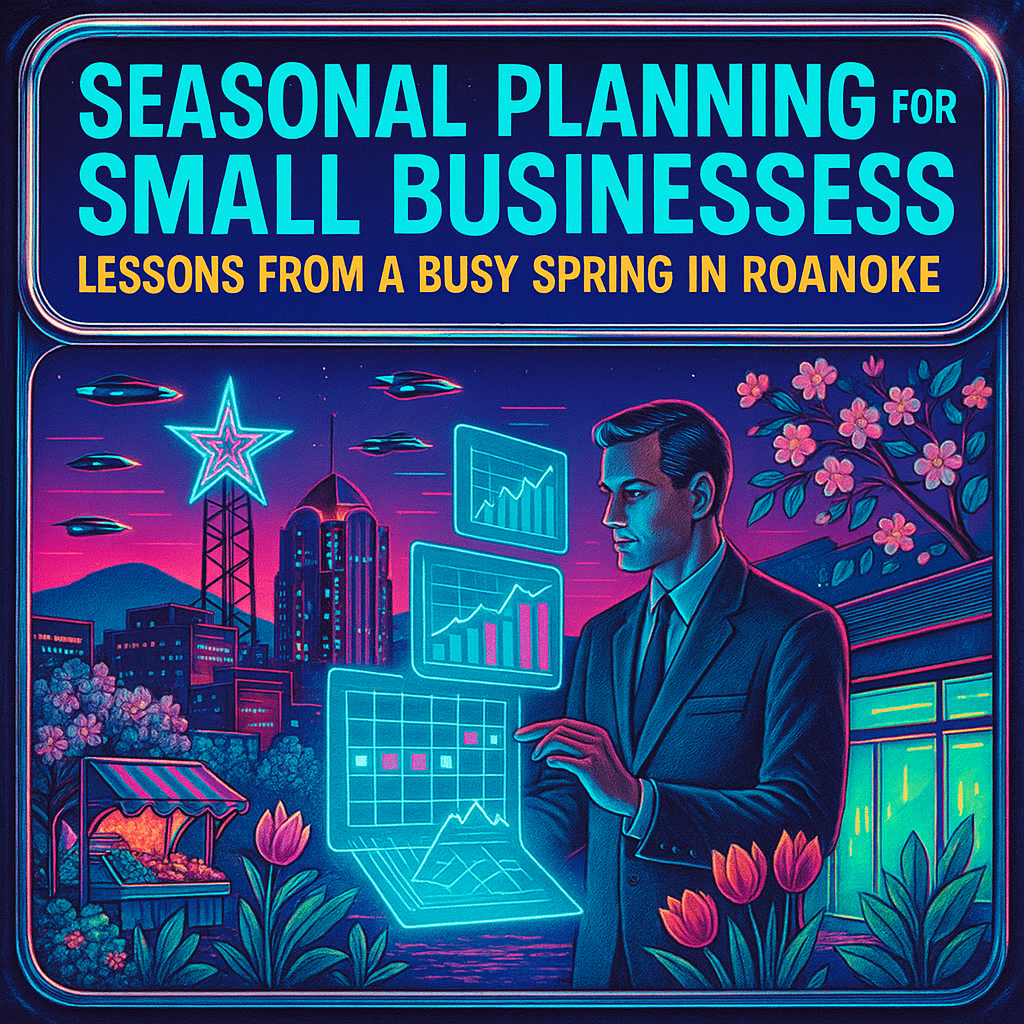
  • Seasonal planning for small businesses: lessons from a busy spring in Roanoke

    Seasonal planning for small businesses: lessons from a busy spring in Roanoke

    When a downtown bar tripled its volume on St. Patrick’s Day and a neighborhood shop lost 35% of revenue during two years of bridge work, the common thread was planning that didn’t match seasonal reality. Seasonal planning for small businesses changes a steady month into a boom or a slow season into an existential problem. This piece walks through practical steps owners can use to turn predictable seasonal swings into manageable rhythms.

    Recognize the true seasonality in your business

    Most owners know they have busy and slow times. Few map them precisely. Start by plotting twelve months of sales, foot traffic, and staffing hours. Use point-of-sale reports, bank deposits, or a simple spreadsheet.

    Look for repeatable patterns, not one-off spikes. A parade or festival can create a huge single-day surge. Construction or a long-running public project can suppress traffic for months. Treat both as seasonal forces: one positive, one negative.

    When you can answer "Which weeks are at 120% of normal?" and "Which months fall to 70% of normal?" you stop guessing and start preparing.

    Build three operational plans: surge, baseline, and shrink

    Create short, distinct playbooks for each state. The surge plan covers predictable peaks. The baseline plan is your normal operating rhythm. The shrink plan prepares you for slow stretches.

    Surge plan: Define staffing bands, inventory buffers, and crowd-control roles. For single-day events, a two-week window of elevated prep and a three-day recovery window often works. Keep a list of temporary vendors, portable equipment, and preprinted signage so you can scale quickly.

    Baseline plan: Standardize schedules, reorder points, and cross-training. This reduces friction and keeps margins steady when things are normal.

    Shrink plan: Establish minimum profitable hours, variable-cost reductions, and a short hiring freeze rule. Protect essential roles and avoid knee-jerk layoffs by shifting staff into training, maintenance, or marketing tasks that pay off after the slow period.

    Cashflow rules that survive seasonality

    Seasonal revenue swings kill businesses when owners live month-to-month. Adopt three simple cash rules.

    1. Build a rolling 90-day cash forecast that updates weekly. Forecast best, likely, and worst cases. When you see a projected shortfall, act two pay periods before it matters.
    2. Smooth payroll by using part-time or on-call schedules during peaks. Offer overtime or temporary bonuses for peak shifts rather than permanent raises. That keeps fixed payroll lean and variable costs aligned to demand.
    3. Create a seasonal reserve equal to one month of average operating expenses. Fund it with a small percentage of each month’s margin during busy months. Even a reserve built at 3–5% per strong month compounds quickly.

    These rules reduce the need for emergency borrowing and preserve decision flexibility.

    Marketing and local partnerships that shift the curve

    Seasonality is partly about demand; you can influence demand. Targeted, low-cost local marketing works well in small markets.

    During slow periods, run campaigns tied to a calendar of micro-seasons: post-holiday clean-up, tax-season specials, early-summer promotions. Use direct email to previous customers with one clear offer and one clear date. That drives return visits without confusing messaging.

    Partner with nearby businesses to create cross-promotions that move people through a neighborhood. For example, a weekend event that coordinates with multiple storefronts spreads cost and amplifies reach. Recruit community organizations when their calendars align with your off-peak weeks.

    Invest in a small events calendar you control. Even a regular monthly theme night or a quarterly sidewalk pop-up gives people a reason to return in a slow period.

    For teams, cultivating a culture of leadership at every level makes seasonal changes less chaotic. When staff understand the why behind shifts, they adapt faster and deliver consistent customer experiences.

    Staffing and training: treat slow time as productive time

    You cannot hire profitably for the single biggest weekend of the year and sustain that payroll the rest of the season. Use cross-training to absorb peaks without long-term hires.

    During slow months schedule structured training blocks. Rotate employees through maintenance, merchandising, and customer outreach. That work improves operations and gives employees variety that reduces turnover.

    Set clear temporary roles for peak windows. Publish those roles and the expected dates well in advance. People plan around certainty. If you need extra hands for a parade weekend or a festival, approach seasonal hires with fixed-term agreements and concise job descriptions.

    Operational checklists to prevent common seasonal mistakes

    • Inventory timing: Move reorder points earlier before known surges. Shipping delays spike before holidays and large public events.
    • Permits and logistics: Apply for street permits, parking plans, and temporary signage at least 60 days before an expected event.
    • Communication: Send a customer-facing schedule of hours and event-related changes two weeks before any major local event. Confusion costs revenue.
    • Scenario rehearsals: Run a tabletop rehearsal for your busiest day. Problems you rehearse cost less than surprises you don’t.

    Closing: make seasonality a predictable advantage

    Seasonal planning for small businesses is not a one-time exercise. It is a cycle: measure, plan, act, review. When you treat festivals, construction, and climate-driven slow spells as predictable forces, you can design operational responses that protect margins, preserve staff, and capture upside.

    Start this week by mapping the next twelve months. Identify one upcoming surge and one expected downturn. Draft a two-page playbook for each and share them with your team. The practice turns guesswork into routine and turns seasonal risk into manageable operations.

  • How to survive small business budget cuts: practical steps owners can take now

    How to survive small business budget cuts: practical steps owners can take now

    How to survive small business budget cuts: practical steps owners can take now

    When the town’s largest event canceled three weeks before the season, a Roanoke coffee roaster lost 18% of its projected revenue overnight. Payroll still needed to be met. Suppliers wanted paid. The owner had decisions to make that would decide whether the business stabilized or slipped into months of scramble.

    Small business budget cuts hit more common than owners like to admit. They arrive as tighter margins, rising benefits, or unexpected municipal and school contract changes. The good news: thoughtful, immediate actions reduce fallout. This article lays out practical steps you can use the week the shortfall appears and in the months that follow.

    Diagnose fast: know exactly where the gap is

    First, quantify the problem. Don’t work with a headline number. Break the shortfall into payroll, fixed costs, variable costs, and one-time obligations. That lets you target the smartest places to act.

    Open last 12 months of bank statements and your most recent profit and loss. Reconcile revenues and expenses line by line. If you use cloud bookkeeping, export reports for the period and compare month to month. You need clarity on how much of the gap is structural and how much is temporary.

    This diagnosis determines your timeline. A temporary revenue drop can be managed differently than a permanent margin compression.

    Short-term triage: protect cash, not pride

    When cash tightens, act immediately to preserve runway. Contact your landlord, vendors, and payroll provider before missing a payment. Most parties prefer a clear plan and a date rather than a surprise.

    Prioritize cash flow over vanity. Delay nonessential purchases. Convert inventory that sits slow into bundled offers or discounted packages with clear expiration. If you have invoices outstanding, offer a small early-payment discount. Those steps can bring receivables forward without heavy marketing.

    Freeze hiring and deferred raises until you have a stable four- to six-week forecast. That may feel politically difficult, but it prevents deeper cuts later.

    Targeted expense cuts: choose surgical over sweeping

    Across-the-board cuts hurt morale and often reduce revenue. Instead, use the diagnosis to cut surgically. Look for redundant subscriptions, underused licenses, and contracts that auto-renew.

    Negotiate with vendors. Ask for short-term relief: extended payment terms, temporary price freezes, or paused shipments. Vendors prefer being asked early. If a vendor insists on strict terms, ask for a short evaluation period where you meet halfway.

    Consider adjusting hours or schedules before permanent layoffs. Reducing overtime, closing an hour earlier on low-traffic days, or consolidating shifts keeps skilled employees engaged while lowering labor costs.

    Preserve revenue through focused customer retention and incremental offers

    Retaining current customers costs less than finding new ones. Map your top 20% of customers who generate 80% of revenue. Reach out with value-focused notes, not promos. Ask what they need and adjust small elements of your offering to keep them around.

    Introduce small, margin-friendly offers that meet existing demand. A service add-on or product bundle that increases average sale by 10% can stabilize the numbers quickly. Test one idea for four weeks and measure.

    Use scheduling and inventory data to shift capacity toward higher-margin services. If a weekday morning slot sells better than Saturday afternoons, move staff and marketing to support that shift until demand evens out.

    Communicate clearly to staff and stakeholders

    Transparency matters when you make changes. Tell staff what you know and what you don’t. Explain the timeline and the metrics you will use to make future decisions.

    Frame tough decisions around preserving the core of the business. People can weather temporary reductions if they know leadership has a plan and will return to prior levels when metrics allow. Keep communications brief and regular. Share a single financial snapshot weekly so rumors do not take root.

    When you negotiate with lenders or partners, bring simple, clear projections. Show how proposed relief restores your runway. A clean model builds trust and improves your chance of better terms.

    Build a resilient plan for the next cycle

    Short-term fixes buy time. Use that time to eliminate single points of failure. Diversify revenue so one contract or event does not determine a quarter. A second or third revenue stream might be smaller but far more reliable.

    Create a reserve policy tied to your business rhythm. Even modest, automated transfers to a rainy-day account after profitable months accumulate quickly. Target two to three months of fixed costs if possible.

    Formalize a quarterly budget review. Make a one-page dashboard that tracks five metrics: revenue, gross margin, labor cost percentage, cash runway, and accounts receivable days. Review it with your management team and adjust actions before a small problem grows.

    If you want to strengthen your approach to change management and leadership in small operations, study times when other local leaders kept businesses steady while expenses rose. The patterns repeat.

    Closing insight: act early and measure everything

    Budget cuts test leadership. The difference between a reactive owner and a deliberate operator is simple. The deliberate operator diagnoses quickly, preserves cash, targets cuts, protects customers, and builds a plan to avoid the trap next season.

    Start with a clear, dated cash forecast that projects 30, 60, and 90 days. Update it weekly. Those three snapshots become your best tool for decision-making. They keep emotion out of hard choices and help you keep the business running while you rebuild margins.

    If you walk away with one tangible next step, make it creating that 90-day cash forecast today. It will force clarity and give you options you do not have when the alarm bells finally ring.

  • Budget Planning for Small Businesses: How to Avoid the Costly Mistakes Owners Make

    Budget Planning for Small Businesses: How to Avoid the Costly Mistakes Owners Make

    Budget Planning for Small Businesses: How to Avoid the Costly Mistakes Owners Make

    Two years into running a local manufacturing shop I woke to a phone call: a major client cut orders overnight. Payroll that week nearly bounced. We had revenue on paper but no liquid cushion. That shock forced a hard look at our budget process and taught me three lessons other small business owners can use before a crisis arrives.

    Budget planning for small businesses is practical work. It is not an annual spreadsheet exercise you forget until taxes. Done well, it reduces surprises and keeps teams focused. Done poorly, it makes every revenue dip feel existential.

    Start by diagnosing what your budget actually measures

    Many owners treat a budget like a wish list. Sales go up, hire more people. Sales dip, slash expenses. That reactive rhythm hides two problems: unclear cash timing and hidden fixed costs.

    Begin by mapping cash flows, not just income statements. List the days between invoicing and cash in the bank. Note vendor payment terms and payroll dates. That simple calendar will reveal gaps that profit figures obscure.

    Separate fixed recurring costs from truly discretionary spending. Rent, core salaries, and loan payments are fixed. Marketing pilots and one-off equipment upgrades are discretionary. Knowing what you cannot change in 30 days makes tough choices less chaotic.

    Protect the revenue engine first, then trim strategically

    When owners cut across the board the easiest targets are visible: marketing, training, or travel. Those cuts can look efficient until you see the downstream effects: fewer leads, lower employee engagement, and slower problem resolution.

    Identify the activities that directly sustain revenue. Keep a small, consistent investment there even when you trim elsewhere. Reduce or pause experiments that cost money but are not producing measurable returns.

    Use simple performance rules. For example, pause any spend that did not generate at least two qualified leads per $1,000 in the previous quarter. Reallocate savings to channels with proven conversion. These rules prevent gut-driven cuts that harm growth.

    Make workforce decisions with data and humane timing

    Labor is often the largest line item. When owners feel pressure they consider layoffs first. That is costly if you lose institutional knowledge or burn culture. There are alternatives that preserve capacity and buy time.

    Before cutting roles, run a scenario that compares partial reductions to temporary hiring freezes and reduced hours. For each scenario, estimate the revenue impact and the cost of rehiring later.

    Communicate clearly and early with managers and staff. People accept temporary measures when they understand why and see a plan for restoration. In my shop we used reduced hours and voluntary unpaid leave for two quarters. It was painful but kept key technicians on the roster. When business returned we scaled up faster than competitors who had to recruit.

    Strong leadership matters during these conversations. Leaders who explain trade-offs and outline decision criteria keep trust intact. That trust preserves productivity and avoids the hidden costs of turnover.

    Build a simple scenario plan and test it quarterly

    A scenario plan answers one question: what will we do if revenue falls X% or cash tightens by Y days? Keep the model simple. Create three scenarios: mild (5-10% down), moderate (15-25% down), and severe (30%+ down). For each, list actions that cascade from least to most disruptive.

    Mild actions might include delaying nonessential hires and negotiating extended vendor terms. Moderate actions add temporary salary reductions and pausing capital projects. Severe actions define the minimum viable operation: which products, locations, or accounts you must keep to survive.

    Run a quarterly “stress rehearsal.” One executive or manager should present the numbers and a recommended step. The goal is familiarity. In a real downturn you will move faster if your team has rehearsed the choices and understood the priorities.

    Use simple financial guardrails that you actually follow

    Guardrails turn judgment calls into repeatable rules. Pick a handful and stick to them. Examples that work for small and midsize firms include:

    • Maintain a minimum cash reserve equal to 30 days of operating costs.
    • Keep a line of credit sized to cover a moderate scenario for 60 days.
    • Set a hiring trigger tied to revenue per full-time employee.
    • Require two-quarter payback for new capital spending.

    These rules reduce emotional decision-making. Revisiting them quarterly keeps them relevant as your business changes.

    Closing insight: planning reduces panic and preserves optionality

    The biggest cost of poor budget planning is not a single expense line. It is the loss of options. When cash dries up you trade speed for survival. Thoughtful budget work gives you time to choose the least damaging option.

    Start small: map cash timing this week. Run one scenario this month and set two guardrails you will follow. Those steps take hours, not days. They reward you with clearer decisions and fewer sleepless nights when the next disruption arrives.

    Budget planning for small businesses is not glamorous. It is daily discipline. Do the work now and you keep your choices when things change.

  • Small business budget cuts: practical steps to protect your team and operations

    Small business budget cuts: practical steps to protect your team and operations

    Small business budget cuts: practical steps to protect your team and operations

    Three winters ago our service shop lost 18 percent of its annual revenue when a major client postponed a project. The spreadsheet looked bleak. People feared layoffs. Leadership meetings stretched late into the night. What stopped us from making a reactive set of cuts was a simple constraint: we had a rule to protect payroll for 90 days while we tested short-term fixes. That rule changed how we prioritized and, ultimately, how we survived.

    Budget cuts happen to every small and medium business. The way you prepare and execute those cuts determines whether you lose customer trust, burn out staff, or come out leaner and stronger. This article lays out concrete steps to manage small business budget cuts with minimal damage to operations and morale.

    Frame the problem: differentiate temporary shocks from structural decline

    Not every revenue dip requires the same response. Treating a short-term shock like a long-term structural problem leads to unnecessary damage.

    First, diagnose fast. Look at cash flow for the next 60 to 120 days. Identify which revenues are confirmed and which are at risk. That clarity narrows choices and prevents knee-jerk decisions.

    Second, separate one-off expenses from recurring obligations. Cutting a one-off marketing spend has different consequences than reducing frontline headcount.

    Third, set a review cadence. Reassess your diagnosis every two weeks until the picture stabilizes. Frequent, disciplined reviews keep you responsive without panic.

    Protect the core: prioritize payroll, customer-facing work, and safety-critical costs

    Payroll and service delivery keep a business alive. When cuts happen, protect the people and processes that generate tomorrow's revenue.

    Map costs to outcomes. For each line in your budget ask: does this preserve revenue, prevent regulatory or safety risk, or maintain customer trust? Rank items by that simple test.

    If payroll is at risk, consider alternatives that preserve jobs: temporary reduced hours, compressed workweeks, or voluntary unpaid leave programs. These are hard conversations but they preserve institutional knowledge and customer relationships.

    Keep minimal redundancy in customer-facing roles. A week without reliable service loses customers faster than a month without a nonessential back-office spend.

    Reduce costs without eroding capability: three practical levers

    First, slow discretionary spend. Freeze new software purchases, postpone noncritical remodeling, and delay conferences. These moves free cash immediately and are reversible.

    Second, renegotiate external contracts. Vendors often prefer some payment at a reduced rate to no payment. Ask for 60-day terms, consolidated invoicing, or short-term price reductions tied to volume. Treat renegotiation as a project: assign one person, set targets, and document agreements.

    Third, simplify operations. Remove nonessential steps in your delivery process, shorten approval chains, and cross-train employees so fewer people can cover key functions. Small simplifications compound quickly and reduce pressure on your team.

    Communicate clearly and early: how to keep trust when you talk about cuts

    People tolerate sacrifice when they trust leadership. Silence creates rumor and resentment.

    Start with transparency about the problem and what you know. Avoid speculative timelines. Explain the decision framework you will use to choose cuts and the review cadence you will follow.

    Give managers scripts for frontline conversations. These conversations should focus on facts, the plan, and concrete support for affected employees. If you will offer outplacement, internal job matching, or temporary part-time options, say so.

    Be candid with customers when service might change. Frame it around continuity: which parts of service you will keep and why. Most customers value honesty over vague reassurances.

    Use scenario-based planning to choose reversible actions

    Make a short scenario plan with at least three outcomes: mild, medium, and severe. For each scenario list triggers, actions, and the owner who will execute them.

    Triggers should be concrete numbers. For example: "If monthly confirmed revenue drops by 12 percent and stays there for two consecutive periods, trigger medium scenario actions." Concrete triggers remove emotion from hard choices.

    Favor reversible actions early. A hiring freeze, vendor renegotiation, and temporary hour reductions are reversible. Permanent layoffs and closing locations should be last-resort moves with clear metrics that justify them.

    Mid-course fixes that preserve leadership capacity

    When the original shock stabilizes, run a rapid post-mortem. Keep what worked and document what failed. Preserve lessons in a short playbook so your leadership team can act faster next time.

    Invest in simple dashboards that track cash runway, labor cost as a percentage of revenue, and repeat customer retention. These three metrics show when to ease or reapply pressures.

    Remember that leadership bandwidth is finite. Protect time for leaders to coach front-line managers and stay visible. Leadership presence reduces panic and keeps teams productive.

    If you want a short primer on holding tough conversations and steering teams through downturns, read practical material on leadership. It helped me structure our playbook without jargon or theory.

    Closing insight: design cuts so you can rebuild

    The test of a good cost-reduction plan is whether it leaves you able to rebuild. Avoid cuts that permanently erode your ability to sell, deliver, or retain customers. Design each action with a reversal plan and a trigger that tells you when to rebuild.

    A budget shock is not just a financial problem. It exposes which parts of your operation you rely on and which you tolerate. Use that information. Protect people, prioritize revenue-critical work, communicate clearly, and choose reversible steps. Do those things and you keep the option to grow again when the environment improves.

  • Seasonal planning for small businesses: how to protect cash flow and sharpen operations

    Seasonal planning for small businesses: how to protect cash flow and sharpen operations

    Seasonal planning for small businesses: how to protect cash flow and sharpen operations

    The year my hardware store ran out of winter de-icer two weeks before the first hard freeze I learned a lesson I still use. I had forecasted demand by last winter’s sales and hoped suppliers would deliver on time. They did not. Customers left disappointed and our cash flow took a hit from emergency, last-minute purchases.

    Seasonal planning for small businesses is not a spreadsheet exercise. It is a set of decisions that keep revenue steady, protect margins, and preserve customer trust when demand swings. Below I walk through practical steps you can use in the next 90 days to make your seasonal cycles predictable and manageable.

    Diagnose your seasonal rhythm first

    Most businesses have predictable peaks and troughs. Identify yours by looking at at least two years of weekly sales and expense data. If you do not have two years, use the most comparable external benchmark you can find.

    Track three things: customer volume, average transaction value, and lead time for products or services. Volume tells you when to scale labor and inventory. Transaction value tells you whether promotions matter. Lead time tells you when to place orders. Without those three you will still be guessing.

    Map the calendar visually. Mark major local events, tax deadlines, school breaks, and weather patterns in your region. In Virginia, festival weekends and college calendars move foot traffic. Add supply-chain lead times so order dates sit ahead of your projected peaks.

    Protect cash flow with timing and contingencies

    Seasonality stresses cash flow. To manage it, separate cash planning from sales forecasting. Create a short-term cash runway for the slow season and a separate plan for ramp-up weeks.

    Adjust payment terms strategically. Offer a small discount for prepayments during slow months. Ask for partial deposits for larger jobs in peak season. Negotiate staggered invoices with major suppliers to flatten out cash outflow.

    Set up a contingency line. A modest revolving credit facility or an overdraft you rarely touch acts like insurance during unforeseen delays. Use it only for bridging, not as a substitute for price discipline.

    Finally, model the worst plausible scenario and the best plausible scenario for each season. If the worst-case needs more than your contingency allows, tighten spending now and rework purchasing cadence.

    Match staffing and operations to demand, not hope

    Hiring fast for a seasonal spike costs more than planned labor. Cross-train existing staff so you can move people between roles. When demand rises, shift trained employees instead of hiring new ones immediately.

    Create a clear seasonal schedule three months ahead. Publish it early so employees can plan. Use short-term contractors only for clearly defined tasks. For customer-facing roles, protect quality with short shadowing periods rather than long training runs.

    Operationally, simplify offerings during peak windows. Reduce menu items or service options that require specialist skills. That reduces errors and improves throughput without expanding headcount.

    Inventory and supplier strategies that reduce risk

    Many seasonal failures happen because suppliers miss a delivery or minimum order quantities shift. Build supplier redundancy for your most critical SKUs. A second reliable source prevents single points of failure.

    Order in tranches. For items with uncertain demand, place a smaller order earlier and a larger top-up closer to the peak. This balances warehouse costs against stockout risk.

    Negotiate flexible terms. Ask suppliers for rolling delivery windows or partial shipments. Most manufacturers prefer predictable orders over last-minute panic buys. If you cannot get flexible terms, prepay a portion to secure capacity.

    Keep a short list of emergency alternatives. Local wholesalers, peer networks, or shared inventory pools let you bridge a few days without paying emergency premiums.

    Use pricing and promotion to smooth the curve

    You cannot eliminate seasonality, but you can shift customer behavior. Introduce time-limited offers in slow windows to pull forward sales. Conversely, institute modest peak-period price adjustments when demand overwhelms capacity.

    Design promotions to change transaction patterns, not just cut price. For example, bundle lower-margin items with higher-margin add-ons that increase average spend. Train staff to suggest bundles so the promotion sells itself.

    Track promotion lift in real time. If a discount eats margin without meaningful volume, stop it. Promotions are experiments. Run small tests, measure results, and scale the winners.

    Leadership habits that make seasonal planning repeatable

    A standard seasonal playbook keeps the business from reliving the same mistakes. Document the decisions that mattered: order dates, staffing rules, promotion performance, and supplier contacts.

    Hold a short post-season review. Ignore hindsight complaints and focus on three questions: what worked, what cost us real dollars, and what we will change next cycle. Make the review date part of the calendar so it happens while memories remain fresh.

    Cultivate relationships with peers in your trade. Local owners share real-time supplier intelligence and often trade small surplus stock. Those informal networks prevent last-minute scrambling.

    If you want to strengthen your team’s decision-making, lean on simple training modules for seasonal roles. Short, repeated practice beats long manuals. If you need ideas about building concise training and decision frameworks, read on about practical leadership approaches that scale in small operations.

    Closing: plan like you will be judged on execution

    Seasonal planning is less about predicting the future and more about shaping responses. The businesses that survive and grow treat seasonality as a system to manage. They map their rhythms, protect cash, match staffing to demand, build supplier fallback plans, and use pricing to nudge customer behavior.

    Start small. Pick one upcoming seasonal spike and run the checklist above. Document the results. After two cycles you will have a playbook that reduces stress, protects margins, and keeps customers coming back.

    When the first freeze comes next year, you will order de-icer early, not because you predicted the weather, but because your plan made the right decision automatic.

  • Seasonal Planning for Small Businesses: How I Stopped Letting Peaks and Valleys Decide My Year

    Seasonal Planning for Small Businesses: How I Stopped Letting Peaks and Valleys Decide My Year

    I learned seasonal planning for small businesses the hard way. In my second year running a local service shop I treated slow months like punishment and busy months like permission to work without a plan. That roller coaster burned out staff, warped cash flow, and left me scrambling on payroll more than once.

    Seasonal cycles are not problems to survive. They are predictable patterns you can design around. Small and medium business owners who plan seasonally stop reacting and start directing resources where they do the most good.

    Start with a simple seasonal map

    The first practical step is to map your year. Use historic sales, bookings, or foot-traffic data and mark three bands for each month: low, normal, and peak. If you do not have five years of data, three will do. If you have no data, make a conservative estimate and commit to refining it.

    This map forces discipline. It shows when to hire temporary help, when to schedule maintenance, and when to push promotions. It makes cash flow predictable instead of mysterious. In practice, I used the map to move heavy equipment servicing to low months and to pre-schedule overtime approval for known peaks.

    Build operating rules tied to the calendar

    Create concrete rules that respond to the bands on your map. Rules remove emotion from daily choices and keep the team aligned.

    Example rules I adopted:

    • When a month falls in the peak band, freeze non-essential capital spending and open two temporary shifts.
    • During low months, cap overtime, offer cross-training, and schedule deep-cleaning or maintenance projects.
    • In any month where projected revenue falls more than 15% below last year, reduce discretionary expenses by a fixed percent.

    These rules do three things. They protect margins during lean times. They prevent burnout in busy times. They let you plan ahead instead of making emergency decisions. A written set of rules also makes it easier to explain decisions to employees and vendors.

    Use staffing and scheduling as leverage, not a liability

    Staffing is where seasonal mistakes become expensive. Hiring and firing around every peak wastes time and morale. I stopped treating labor as a flexible cost to be trimmed only after problems appeared.

    Instead, I created a core team for consistent work and a small pool of cross-trained part-timers for variable demand. Cross-training increased scheduling flexibility. Part-timers moved between customer service, light production, and admin tasks depending on need.

    Shift templates help. Define three templates: normal, peak, and recovery. Publish them six weeks in advance. When the team sees a predictable pattern, absenteeism drops and coverage improves. You also solve payroll surprises because you know how many hours the templates require.

    Cash flow planning that follows the seasons

    Seasonal businesses live or die on cash flow. The financial plan must mirror the seasonal map.

    First, set a rolling 90-day cash forecast updated weekly. Forecasts reveal shortfalls before they become crises. Second, build a seasonal reserve. Even a reserve equal to one month of fixed costs smooths payroll and supplier payments during slow stretches.

    Third, manage payables to match inflows. Negotiate net terms with suppliers in low season and accelerate payments during peaks only if discounts make sense. I learned to push major vendor payments into the high-revenue window when required, instead of letting a sudden bill force a high-interest line draw.

    Marketing and inventory timed to demand

    Marketing should solve predictable problems, not chase fads. Match campaign intensity to your seasonal map. In low months, run campaigns that drive retention and referrals. In peak months, switch toward operations-focused messaging like extended hours or appointment availability.

    Inventory follows the same logic. Overstock in slow months ties up cash. Understock in peaks costs sales and reputation. I started using a simple days-of-inventory metric per product category and adjusted reorder points by band. The result: fewer emergency orders and better gross margins.

    Midway through this process I also realized how important mindset is. Leadership that plans seasonally creates calm. Teams with predictable schedules can plan family time, which reduces turnover. If you want an easy lens on how management behavior shapes outcomes, study how you set expectations during peaks and valleys. That investment in leadership pays dividends in stability.

    Small changes that compound: calendar-driven projects

    Finally, use low months for improvement projects that compound over time. Schedule one operational project per low season. Examples include redesigning a workflow, updating training documents, or piloting a new supplier. Doing one thing well every slow season adds up faster than trying to overhaul everything at once.

    I used a winter low month to overhaul our intake workflow. The change reduced average service time by 12 percent in the next peak season. That improvement didn’t require new technology. It required the focus that only a calm month provides.

    Close with a clearer frame

    Seasonal planning for small businesses is not a spreadsheet exercise. It is a discipline that ties operations, staffing, cash, and marketing to a predictable rhythm. Start with a seasonal map, codify operating rules, and treat low months as windows for investment.

    You will not eliminate uncertainty. You will reduce it. That difference lets you allocate time and money where they do the most work. When the calendar turns and the next peak arrives, you will meet it intentionally instead of being surprised again.