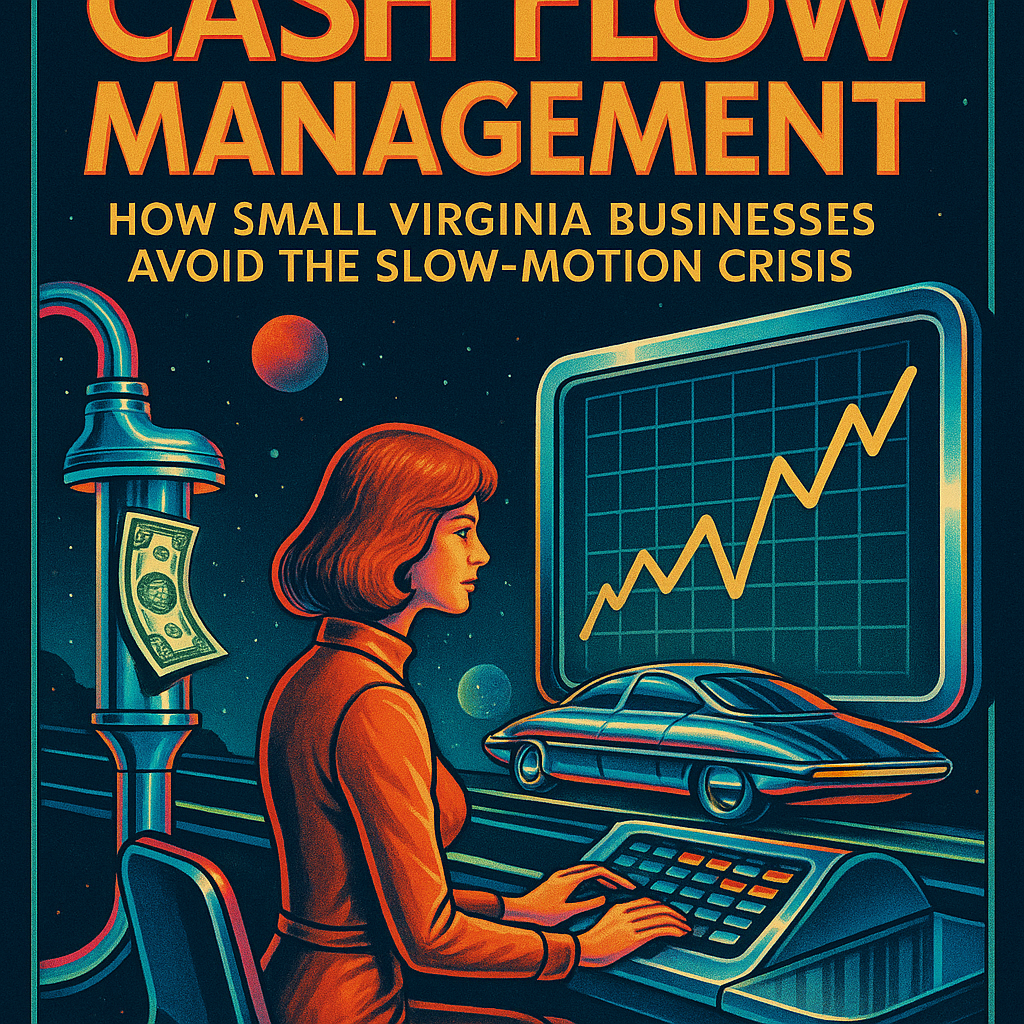
Cash Flow Management: How Small Virginia Businesses Avoid the Slow-Motion Crisis
Three winters ago a family-run machine shop in a small Virginia town won a steady contract that doubled revenue. The owner celebrated, hired two machinists and bought a second shift. Two months later the client pushed payment terms from 30 to 60 days. Payroll came due on week five. The new hires had to be let go. The contract remained profitable on paper, but poor cash flow management turned growth into a staffing and reputational headache.
Cash flow management must sit at the center of every owner’s decision-making. When it does, you avoid scramble hiring, emergency loans, and last-minute price hikes that lose customers. This article shows practical steps owners can take to steady cash flow and protect growth.
Spot the early warning signs of cash flow trouble
The simplest problems often show up first in bank activity. Watch for growing gaps between deposits and payroll dates. If receivables rise faster than sales, you have a timing problem. If inventory piles up while margins shrink, you have a conversion problem.
Run a short, weekly cash snapshot. List expected cash in and cash out for the next 30 days. Update it twice a week during busy seasons. The act of looking will catch surprises early and change conversations from panic to planning.
Practical metrics to track every week
Track three numbers: cash on hand, days sales outstanding (DSO), and committed payroll plus fixed costs. Those three figures tell you whether you can cover the next 30 days without new revenue.
If DSO climbs beyond your normal window, escalate collection actions. If cash on hand falls to cover less than two pay periods, pause discretionary spend immediately.
Fix the fundamentals: invoicing, terms, and collections
Many owners treat invoicing as an afterthought. Make it a system.
Issue invoices the same day work completes. Use short, clear payment terms and state late fees. When clients ask for longer terms, negotiate something in return: a small discount, phased deliveries, or a deposit.
Design a simple, humane collections cadence: a polite reminder at day 10, a firm log at day 25, and a call from a senior person at day 40. Document everything. Often the difference between a paid invoice and a write-off is consistent, timely follow-up.
Use pricing and contracts to remove timing risk
Contracts and pricing can shift cash timing in your favor without changing overall competitiveness.
Ask for deposits on new projects. For recurring work, align billing with measurable milestones. Offer a small discount for early payment or automated ACH. Add a modest financing fee to extend terms for clients that insist on long windows.
When you renegotiate prices, do it by value and timing. A client who benefits from your reliability can often accept a small price change if it prevents service interruptions.
Build a short-term funding plan before you need it
Lines of credit and invoice financing protect operations when timing slips. But apply well before you need them. Lenders and factoring firms underwrite faster when your books show discipline.
Maintain one conservative borrowing option sized to cover two months of payroll and fixed costs. Keep documentation current: bank statements, aged receivables, and a simple profit-and-loss. You will pay for the convenience when you draw, but you avoid costly forced decisions.
Operational levers that preserve cash without killing growth
When cash tightens, owners often cut marketing or delay maintenance. Those are blunt instruments. Use targeted cuts and efficiency levers first.
Delay nonessential capital spend but maintain critical maintenance that prevents downtime. Tighten purchasing controls by batching small buys and negotiating payment terms with suppliers. Use staggered hiring: hire key roles first and add shifts or contractors as revenue arrives.
Improve labor utilization by shifting non-billable tasks into slower shifts or using short-term contractors for project spikes. These choices preserve service levels while slowing cash burn.
Strengthen customer relationships to reduce payment friction
Customers who respect you as a partner pay reliably. Communicate proactively when delays appear. Explain the impact of extended terms and propose structured alternatives.
Use account reviews to surface payment issues early. A 15-minute quarterly call where you jointly review upcoming needs and invoices reduces surprises and builds mutual accountability. If a long-term client faces difficulty, agree on a temporary payment plan that keeps supply lines open and protects margins.
Midway through your internal improvements, leaders should reinforce culture around cash. Good financial habits do not happen by accident. Read short, practical pieces on organizational leadership to shape how teams treat cash and accountability.
A checklist to implement this week
- Create a 30-day cash snapshot and update it twice weekly.
- Standardize invoicing: same-day issue and explicit terms.
- Implement a gentle collections cadence and assign ownership.
- Open or refresh a small line of credit before you need it.
- Negotiate supplier terms and ask for deposits on large jobs.
These six actions cost little time. They buy breathing room and control.
Closing insight: treat timing as a product
Treat cash flow like a product you design. Customers consume your product on a timing schedule. If your billing, collections, and financing are inconsistent, the product fails even when demand exists.
Design processes that make cash predictable. Small changes in invoicing cadence, contract structure, and short-term funding produce outsized stability. When you remove timing risk, growth stops flipping into crisis. You keep employees, meet customer expectations, and choose expansion on your terms.
Manage timing, and the rest becomes manageable.
Leave a Reply