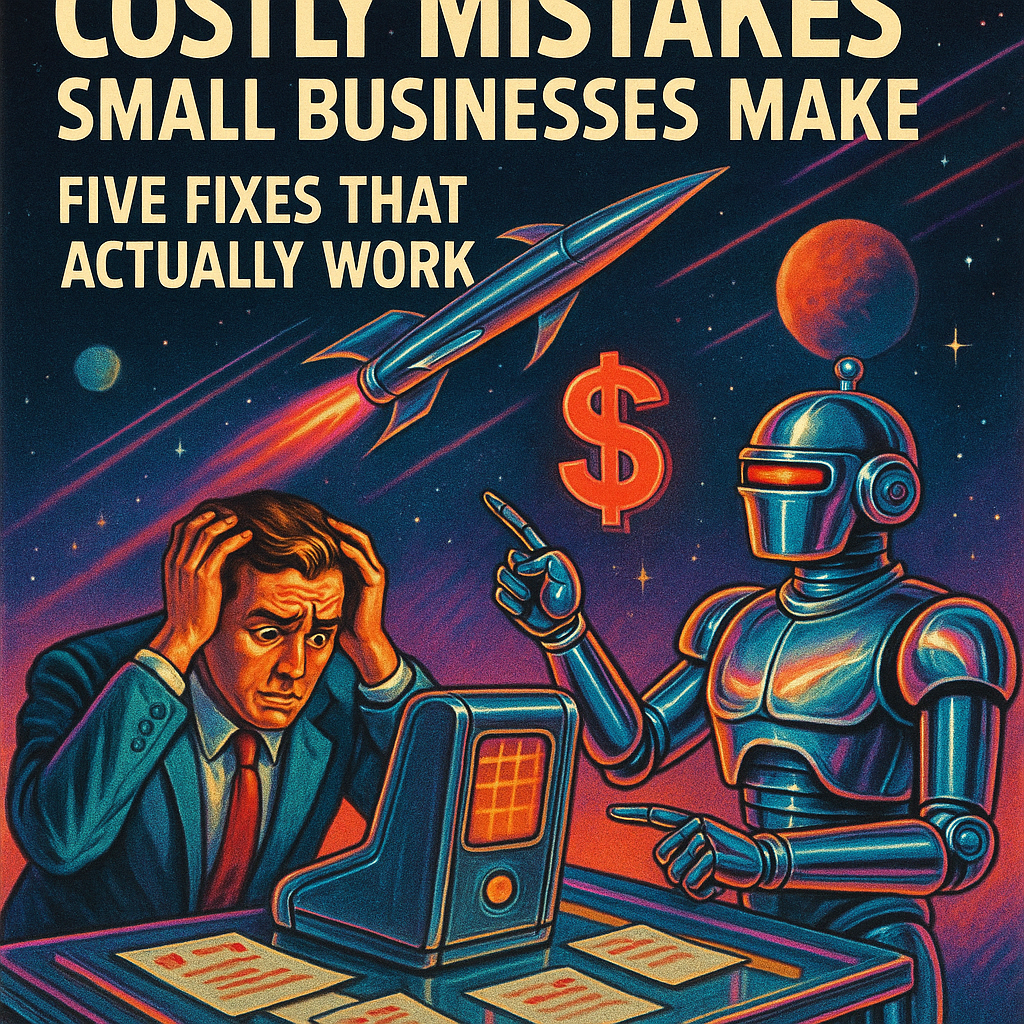
Costly mistakes small businesses make — five fixes that actually work
I remember the winter we lost a quarter of our revenue because we treated forecasting like a hopeful guess. The problem was not that sales dipped. The problem was we had no plan for a dip. That blind spot cost payroll, vendor trust, and two good hires.
Costly mistakes small businesses make are rarely dramatic. They creep in as small decisions that compound. This piece walks through five recurring errors I have seen in multiple shops and the concrete fixes that stop the next avoidable loss.
Misreading cash flow as the same thing as profit
Many owners look at a profitable month and feel safe. They forget profit is a snapshot while cash flow is the rhythm of the business. Payables and receivables often fall out of sync. A busy month with slow collections becomes an operational crisis.
Fix: adopt a rolling 13-week cash forecast and update it weekly. Track the actual cash balance against the forecast and force three decisions when the variance exceeds 10 percent: shift payments, accelerate collections, or postpone nonessential spend. The process is simple. Do it with a sheet and a single owner sign-off. The discipline matters more than the tool.
Pricing by habit rather than by cost plus market
Owners frequently raise prices when they feel desperate and cut them to chase volume. That behavior erodes margins and trains customers to wait for discounts. Pricing needs to reflect cost, value, and scarcity, not emotion.
Fix: calculate your true landed cost for your core products and services. Add the contribution margin you need to cover fixed overhead and desired reinvestment. Then benchmark with three local competitors and adjust for unique value you deliver. Make a small, staged price change once a quarter instead of reactive swings. Test in one region or customer segment before rolling out broadly.
Hiring to patch a problem rather than build capability
A typical mistake: hire for immediate grunt work and expect the new hire to scale into responsibility. That often leaves the role undertrained and the team brittle. Turnover follows and institutional knowledge walks out the door.
Fix: define the role as capability plus outcomes before you post the job. Write three measurable outcomes you expect in the first 90 days and the 12-month competencies you want. Hire for potential where necessary but pair the hire with a 60-day training plan and an internal mentor. This reduces the chance you’ll keep hiring to fix the same problem.
Ignoring simple process documentation
Small businesses trade speed for chaos when processes live only in people’s heads. That becomes painfully obvious when someone is sick, quits, or when a seasonal surge arrives. The resulting mistakes cost customers and morale.
Fix: capture eight to ten core processes that touch customers or cash. For each, record the steps, the decision points, and the owner. Keep each process to one page. Store them in a single folder and review quarterly. The work is not about bureaucracy. It is about ensuring that a competent person can reliably do the work when needed.
Treating leadership as a fixed personality trait instead of a practice
Leaders who expect people to simply follow instructions create dependence and slow reaction time. In many small firms, the owner becomes the bottleneck because the team lacks the authority or clarity to act. That creates burnout and lost opportunities.
Fix: practice distributed authority in three small moves. First, name decisions that anyone can make without permission. Second, document the thresholds that trigger escalation. Third, coach one person a month on decision-making with real problems, not theory. Over time this approach builds resilience and improves morale.
Why the fixes matter together
Each of these mistakes compounds the others. Weak processes make hiring harder. Poor cash forecasting leads to panic pricing. A team waiting for the owner causes missed opportunities and fatigue. Fixes aligned to cash, people, and process reduce variability and protect both margin and reputation.
Midway through implementing these changes you will confront the awkward balance between control and trust. That is where practical leadership shows up. If you want a short primer on developing the muscle to decentralize decisions and hold teams accountable, reading on leadership can be surprisingly effective. leadership
Simple first steps to get started this quarter
Start with one outcome and one accountable owner. Pick the weakest area you can fix in 45 days. For most firms that is cash forecasting or process documentation. Set two measures you can check weekly and two small consequences for missing them. For example, if forecast variance is above 10 percent for two weeks, pause nonessential hiring and review receivables.
Progress compounds. A reliable forecast makes pricing decisions calmer. A documented process speeds onboarding. A trained decision-maker prevents bottlenecks. Small wins build the operational runway you need to grow without repeating old mistakes.
Closing insight: make preventable failure visible
The single most valuable habit I adopted was making preventable failures visible in a short weekly meeting. We called out one near-miss and one avoidable error. We asked two questions: what caused it and what one change stops it from happening again? That meeting cost 20 minutes and saved months of rework.
Costly mistakes small businesses make are not mysterious. They are patterns. The path out of them is methodical: measure cash, price deliberately, hire for outcomes, document process, and practice distributed authority. Fix those five things and you will be less surprised by setbacks and better able to use the resources you have.
Leave a Reply